Tag Archives: sailing

It’s Never What You Think It Is…. Antenna Orientation !!

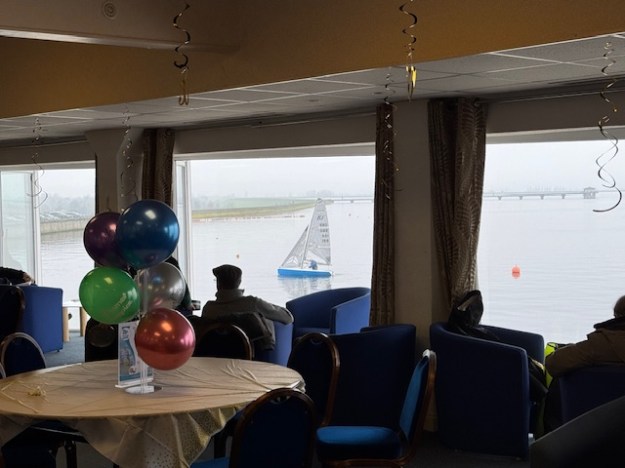
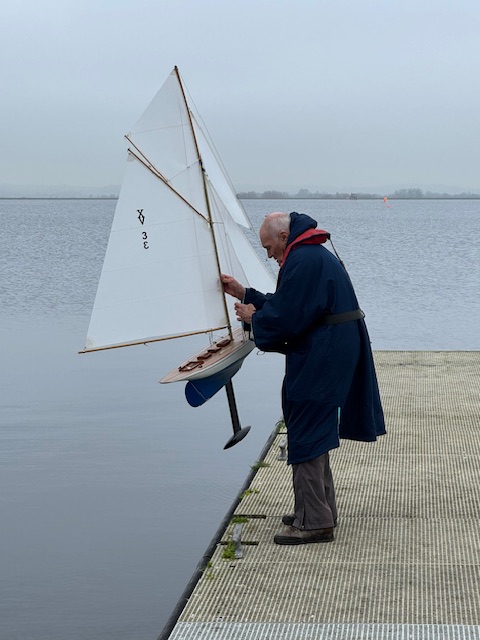
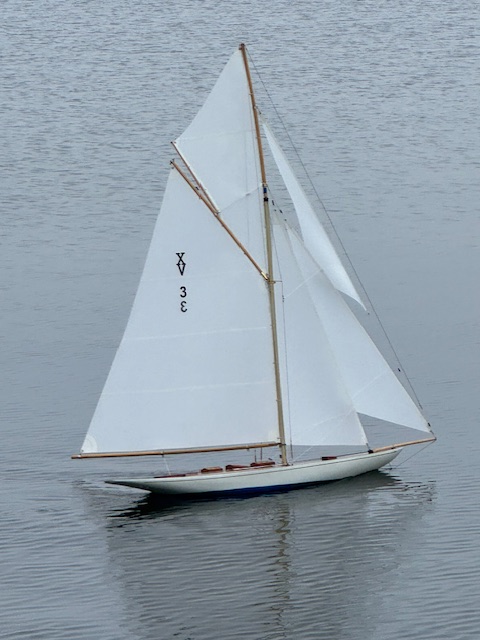
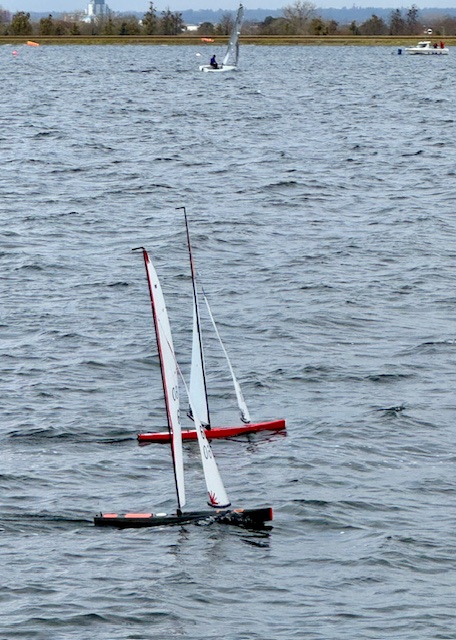
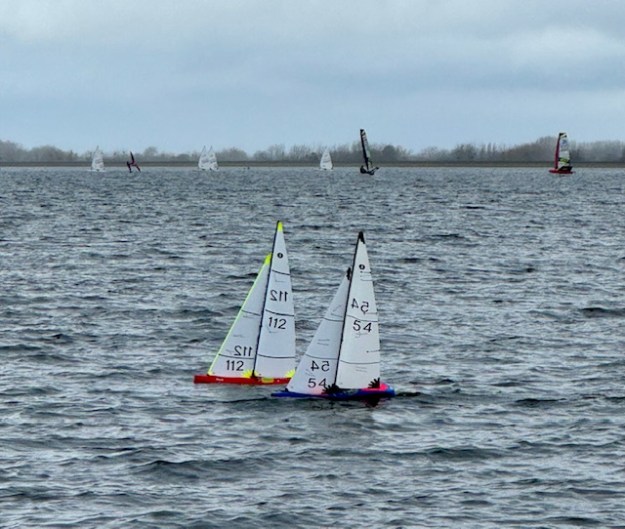
We had a terrific time at the Ten Rater Rankings – pretty breezy!! My goodness, those boats look amazing under power, especially downwind. Might have never before seen RW running along the shore quite so fast to keep up!!

A few minutes after I took this photo of RC holding his transmitter aloft to get control of his boat back… the rudder dropped off and his boat drifted ashore!!

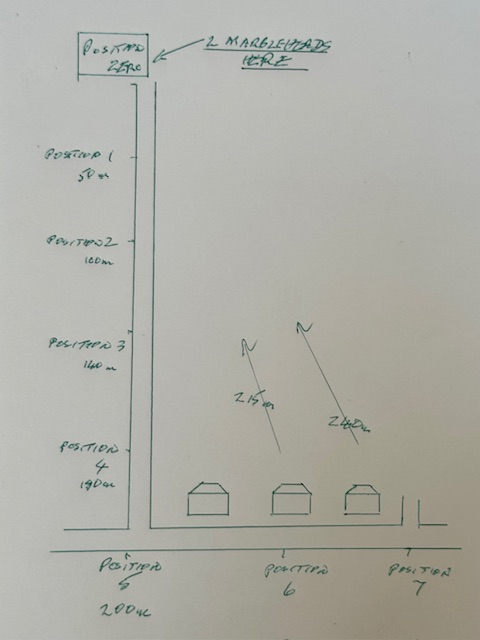
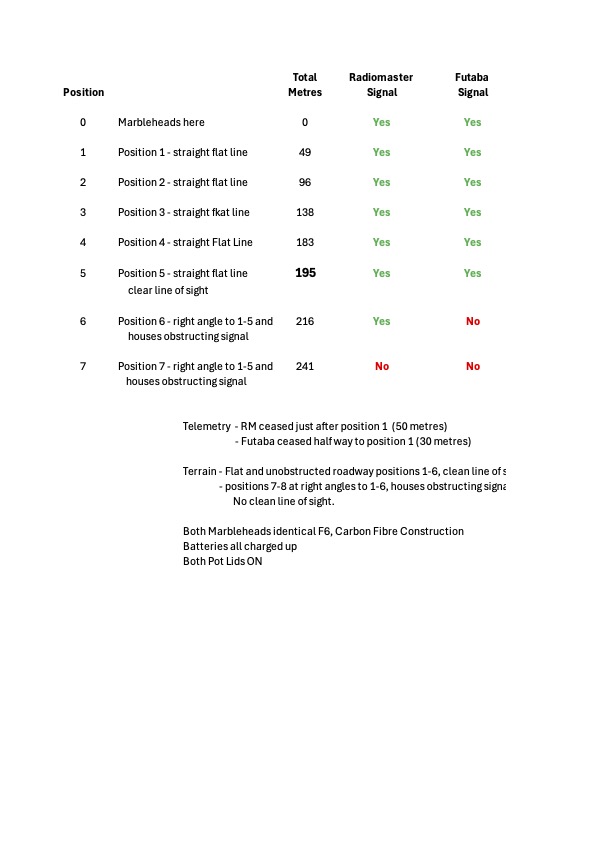
We were not racing far offshore at all, so it did get me wondering about transmitter-receiver connection strength again. Most of the fleet were on Futabas that day. Nobody was really having radio issues at all, including RC as it turns out. We had one or two Radiomaster and Spektrum fans – no problems at all there either. Phone signal was a bit depleted way down in the reservoir bowl though. Our water is maybe down 60 feet beneath normal depth.

We have written some articles previously along the lines of “we all blame the transmitter… but it could be the receiver, the receiver position, the receiver antennae, the carbon versus glass fibre…” etc….. A complex situation.

Then, today, on a radio pilots internet forum, I discovered someone who had a theory that his signal strength to his receiver was weakest if he pointed his antenna directly at his plane – I guess 45-90 degrees above him. Remember, our boats will be roughly horizontal from us so the 45-90 degrees above” comment needs translation into the sailing context.

I tried reading a pile of Futaba manuals, and for the T16 model (with a waggly adjustable antenna) I found this….

They very clearly say for flying, that the optimum is that the antenna is “horizontal” and basically at right angles to the line between the transmitter and the plane.

So with my Spektrum, whose antenna swivels about 60 degrees but pointing straight ahead (at the boat most of the time) … it probably needs to have the antenna pulled upwards to the maximum?

Then for the majority in our fleet who use Futaba T6 transmitters, the manufacturer has decided the answer for us – and the antenna in our T6 models is horizontal, built into the handle. Same for my Radiomaster really, whose antenna is horizontal but on a little hinge.

So if you have a Futaba/Radiomaster and think your boat is out of range, directly face the boat and do not stand at 90 degrees to the boat ?? Is that correct??

(Suddenly remembering a story from our Commodore who says that with a Futaba – mind you, possibly several years ago – he regained signal contact by tilting the transmitter on its side and holding it above his head… so not at all what Futaba says in the T16 manual !! ….Or is it??!! Draw an imaginary line between skipper and boat and then hold the antenna at right angles to it….?)

Did I get that correct?? Someone will hopefully write in and tell me. If you know the answer, please use the comment facility on this website entry !!

FR Sky Transmitters…!!

I managed to get my hands on one of these a couple of days ago. From the airplane and gliding world, the FrSky Tandem X20….. Bit of a wow. It was interesting to see what they use over in flying.

They cost about double (450GBPs) what radio sailors would think of as “pricey”, but can you tell the difference?

Amazingly – a resounding “yes”…. the feel was a huge step up from what we are used to. The body was a lot more solid (alloy maybe) and interestingly weighed about 900g so a bit heavier than common radio sailing transmitters. It felt very good in my size/shape hands. The “Apple” of transmitters maybe.

Gimballs (“Hall gimbals”) very smooth and more central on the console which somehow gave a nice balance (nearer centre of gravity perhaps) while you used it. Thinking about it more, if you move the screen to the top of the unit (most of our transmitters have the screen at the bottom), you can then move the gimbals down lower on the console itself.

Another thing I noticed was that the gimbals can be rotated slightly for those in search of more comfort over longer periods. Somehow, the whole thing looked more showerproof too. Really tightly fitted together.

When we decided to write the radio sailing manual for Radiomaster transmitters, I came across FrSky because the previous range FrSky along with Radiomaster use the same OpenTX software. FrSky seem to have abandoned that OpenTX strategy now as it was holding them back. They have done their own modern looking operating software called EthOS. That’s amazing too – it’s like having a full iPhone aboard, …all icons, colour and sexiness. Lots of preloaded configurations for power mixing and the like.

I might have misunderstood, but the owner said you could send updates (like custom model configurations) to it “over the air”…. so he can swap configurations with friends very easily.

The owner of the unit that I tried was a Competition Gliding fan. I asked what he used previously, and interestingly he had a Spektrum DX6E – which of course is very common in sailing.

Way over-configured for the needs of radiosailing, but it was interesting to see what £450 would buy you.

Marblehead Hull Bags….!!

How do you protect your hull when it’s in the car boot ? Or elsewhere?

When I started with a loan IOM boat, I simply lined the car boot with old towels and travelled around like that. To be honest, it only needs a sharp dab on the car brakes and things can get a bit out of hand back there.

When I received my One Metre, the builder said not to keep taking the fin on and off – so I ordered one of those One Metre Onesie bags from David Potter – see the category named “Transporting the Boat” on this website. I’ve come to quite like that bag, but I have to remember to remove the bulb cover before sliding it in. It all feels very safe and well protected.

By contrast, transporting the Marblehead is somewhat more challenging due to increased dimensions. David Potter does supply a Onesie bag for that job, but as the fin is 55cms below the hull, most people I think, remove the fin for travelling ….. leaving the rudder in place.

For a year or so I have been using the (lovely) lower bag for the Marblehead. Albeit with the rudder sticking out at the end, but it’s still fabulous. All soft and snug! You could sleep in a human size version. It has an adjustable strap and buckle for the enclosure.

Rudder protection does worry me though – our member Richard U designed a new bag with a simple drop down section for rudder protection – the top bag in the photo. It has a velcro strip for sealing the enclosure. Nice – I’d hazard a guess that the same design will take a Ten Rater too. The first couple of car trips using this have been very promising.

So now I have two bags…. question … “what is the ideal number of Marbleheads to own?”

“N+1….. where N is the current number that you have…”

The lovely bags are available at K7yachts or you can contact us vis the email address on the CONTACT page of this website.