Tag Archives: travel

Worlds …. Flagpoles…!!

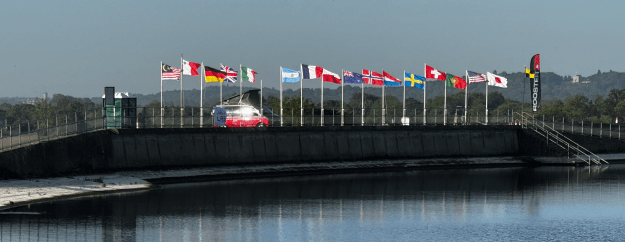
(Above : Half the IOM Worlds flag set)

You cannot really run a continental, global or world championship without country flags can you?

There’s the traditional Opening Ceremony for a start and I wouldn’t underestimate the importance of making the race marshalling areas look a bit more jolly!!

We had 28 countries in attendance. No matter how you look at it, just about any budget number that you have to multiply by 28 is going to end up being a four digit sum. If you take a minute to work it out, the income fees for 84 entrants comes to around £40,000GBP. So if you’re not resourceful, you could be looking at 5% of Championship income just to pay for the >*&+<& flags!

So what to do? You’re only like to use them the one occasion at your club….

For a start, where to get your collection of flags from? We used “The Flag Shop”in UK. We ordered pretty large flags, maybe 5’x3′, (see photo) for each country. They must have stocks of flags already made, but if you order all 28 at once it turned out to be quite low cost. I recall maybe £300-£400 for the set of 28. If the Championship WDN/Wait-list springs an extra country at the last moment the cost for one flag was a LOT higher.

TIP : grab an indelible pen and label them all upon arrival with country name and “TOP” …well in advance of your championship ceremony. It’s easy to cause offence by flying them upside down. The Union Jack is not the only flag with this characteristic.) NO human really stands a chance of remembering 28 flags by country name.

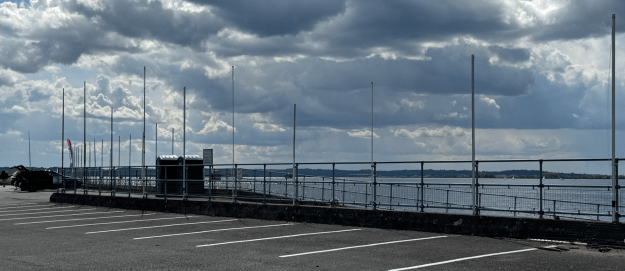
Your venue is unlikely to have a nice stock of flagpoles to accommodate 30 or so countries, so you might have a procurement problem. You need around 4m high poles, with block and lanyards … all times 30. Financially that’s a big part of your budget right there. If you can get a rigged 4m flagpole for £30 each I’d be amazed. Let’s say £1000 of poles. So what to do?

Our venue host is a 50 year old dinghy and keelboat club. You’d be amazed what broken masts and booms get dumped by club members as the decades sweep by. In fact, Datchet had the entire history of mast design and building right there hidden in the pile…. Selden/Proctor sections, carbon masts, tracks riveted on/inbuilt, laser two section masts … and an old wooden enterprise mast!!

I’m not going to kid you that it was a small amount of work, but saving £1000 of budget is a huge deal.

A couple of lovely people teased us that we got the flagpole lengths different each time (see photo above)…. but were generally delighted to see the recycled materials that the flagpoles were actually made from.

The work involved:

  • we had one day with around six or seven DRS volunteers sorting the old masts, stripping spreaders, hounds and various fittings from them. Our sailing sec, Hugh, is a demon with the angle grinder and cut around half of them to 4m (ish) lengths on day one. If they were topmasts, they usually had a masthead fixing we could re-utilise. Sounds a lot of man-hours, but honestly it was a ton of work.
  • On day two, Hugh-the-angle-grinder-king, cut the remainder to a length and ensured we had a top fixing of some sort …. and that from our sponsored flagpole halyard supplier they were all rigged with a hoist lines.
  • On day three it took three volunteers to fix 28 or 29 poles to the landlord’s railing uprights. It took two scaffold brackets per pole – we got around 60 from somewhere but I feel the cost was around £150 for a box of 60..

Saved a fortune.

Post championship, I was about to start quietly dropping the flags (what to do with those? Sell them to the next Worlds?) and taking the poles down maybe two per day…., then the Dinghy Club Manager said it all looked great and could maybe a continuing club asset – they host lots of school and junior events for example. Flags a nice feature there…

Good!!

To the Team running the 2027 Marblehead Worlds, if you want a set of country flags, do get in touch!!

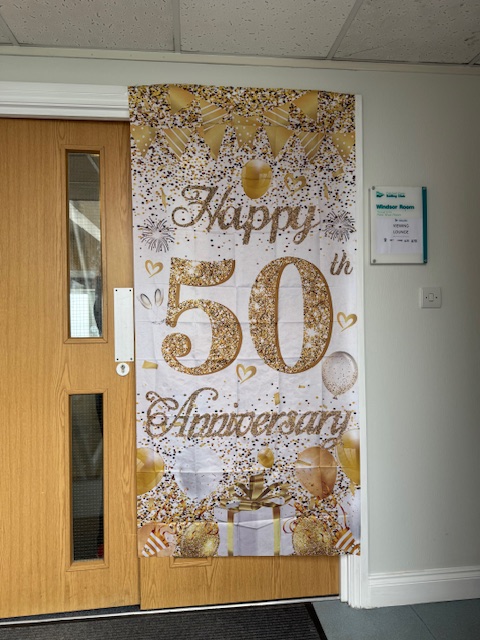
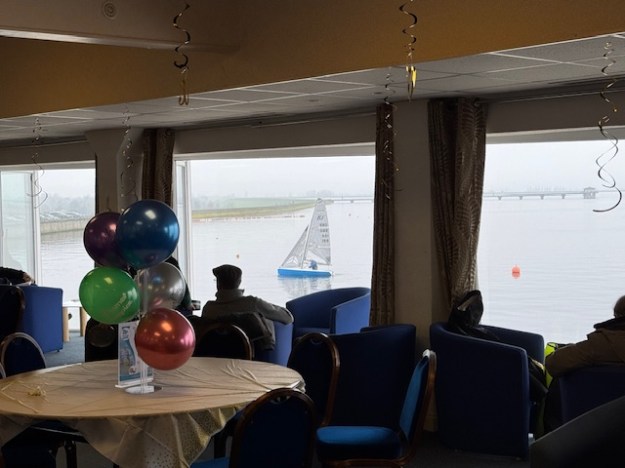
Datchet Club’s 50th Anniversary….!!

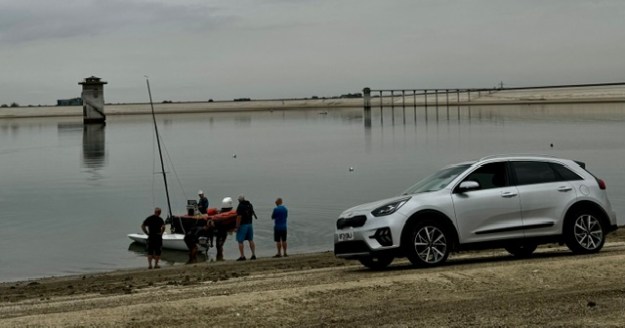
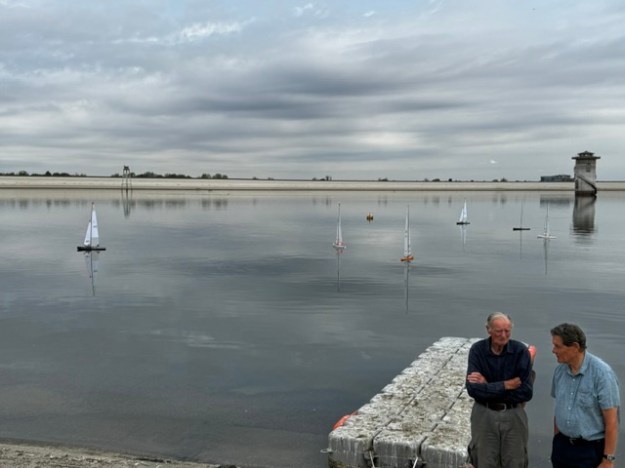
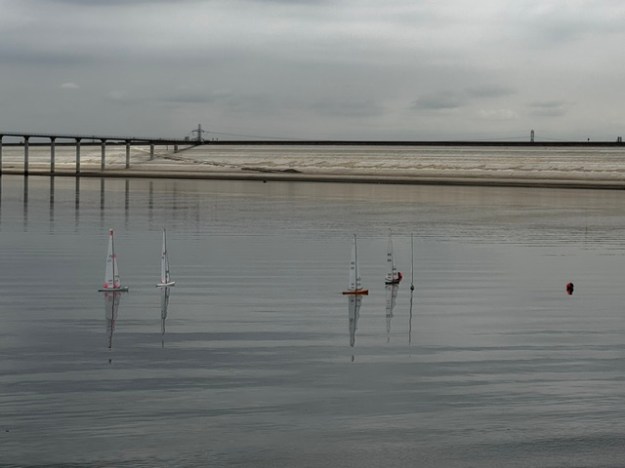
It was our host Club’s 50th Anniversary celebrations this weekend!! Good to feel part of it with them. They combined a few onshore celebrations with the 2026 Club Championships out on the water. Racing was greeted by a misty 5mph breeze, but looked pretty intense !!

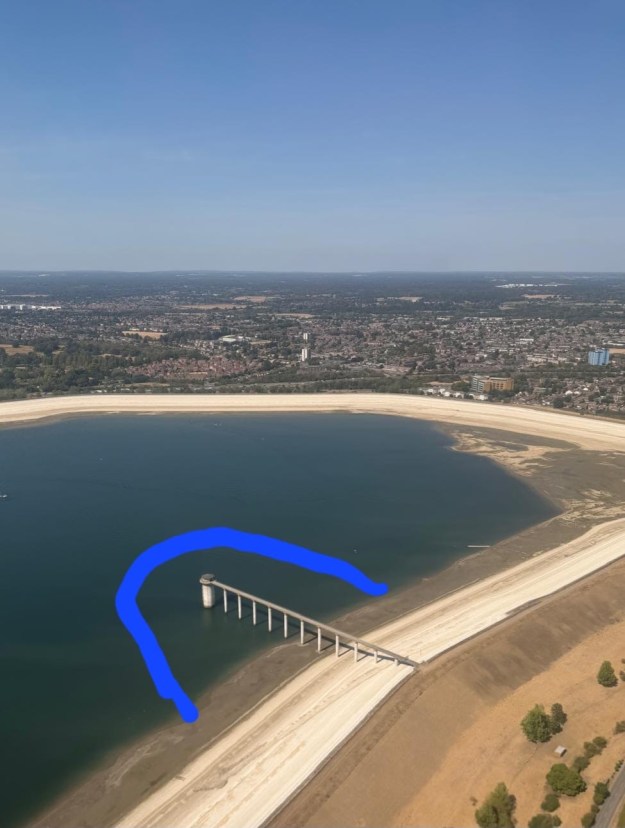
Onshore there was meant to be a charity walk around the Reservoir (about 3 miles) but amazingly permission was withdrawn by the landlord – pity! Still we had the ladies run a Hospice shop – great jigsaws on sale!

The upstairs had been properly decorated and was looking great for the Championship prize giving not to mention the Bake Off Competition!

As it happens, five key members of Datchet Radio Sailing were competing away from home, leaving us somewhat depleted. The cool misty day would not have helped either – it wasn’t all that alluring!!

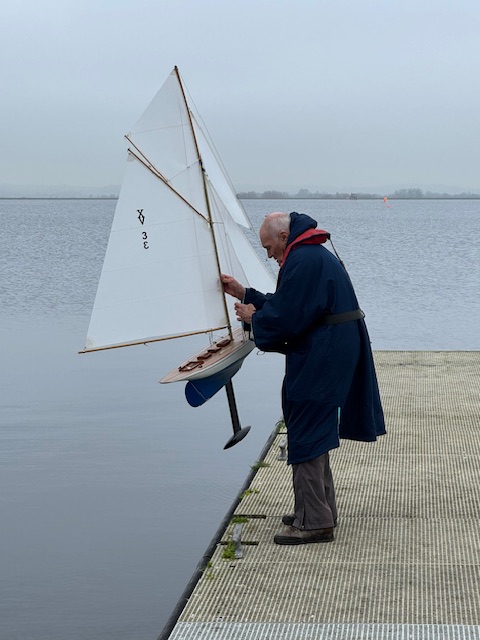
To make up for it, Graham brought a couple of stunning boats from his personal collection – with Howard and Richard there to give a hand, plus Phil consulting on the phone!. By the way, Richard 30 years a member and Howard even more than that !

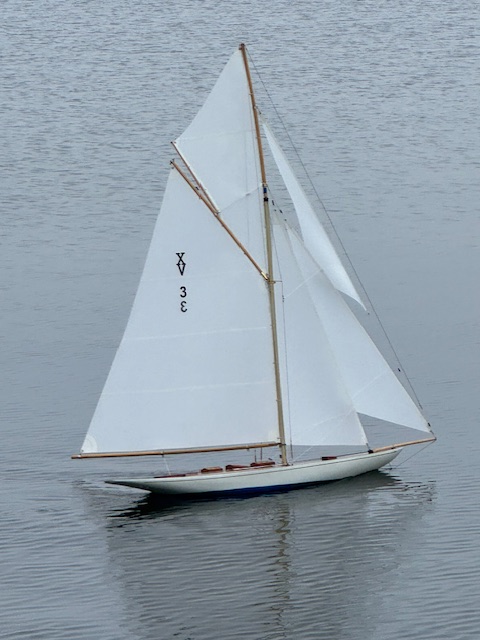
The first was this amazing radio gaff rig cutter – quite a size actually. Superb craftsmanship as you’d expect – one of four built to the 15 metre rule for a group at Frensham. Technically very interesting to sail as there were three radio channels – main and jib sheets being on separate channels of the left joystick. (RJ thinking about some areas where the radio can help out – the joystick for jib sheet goes in different directions on starboard and port!)

Was this the first time a gaff rig had been seen at Datchet ?? Maybe!

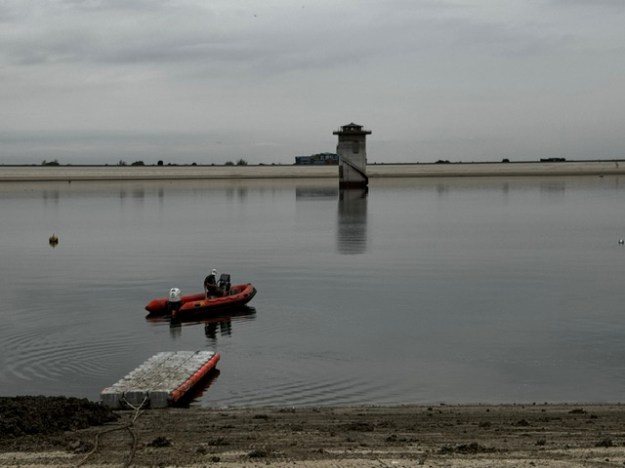
The second boat was a converted Vane Ten Rater built to the old rule. That’s the one that stole my heart today – a gorgeous complete rebuild and running on radio now. Stunning and a whopping size. Stupidly I didn’t get photos of that as I had my IOM on the water on “rescue” duty in case we lost the gaff cutter … which happened a few times on saturday!! A small matter if the mainsheet not staying on the winch drum as intended!!

Receiver Range Test Comparison – Radiomaster ELRS versus Futaba with Antenna Frame (from SailsEtc)

We have had lots of Club chatter over the months/years about radio range, losing signal to the boat and so on… the merits of different transmitter brands etc. Remember, you can lose radio contact with the boat for SO many reasons.

You’ll all know that Flyers in free sky find they get simply massive radio range and quote exciting numbers stated in whole kilometres – 10 km not being unusual.

What range do we need in radio sailing? 100m maximum I should think. Nonetheless, “who gives the strongest signal and furthest range” continues to intrigue us.

We have had Club members trialling ceramic antenna based receivers (no dangly wires) from Spektrum and Radiomaster ELRS. These dinky little receivers are great in a sailboat “pot” with zero wires from a space management viewpoint. They were though designed/optimised for indoor car racing – all very different. The Futaba equivalent wire-free receiver actually states a maximum 70m range, so I’ve not bothered to test it.

A unique combination of circumstances came up this morning. Two identical, carbon fibre hulled F6 Marbleheads, one with Radiomaster TX15 and ELRS (ER3Creceiver). The other rigged with Futaba T10J and their cable antenna F3006SB receiver…. fitted in a SailsEtc antenna frame that tucks it neatly at the pot top,… wires at 90 degrees as recommended by Futaba. …Plus no rain!! …Plus a spouse who was willing to help by watching boats out of the kitchen window (very rare treat!). All batteries were fully and equally charged. Transmitter power/strength settings, transmission packet rate, were as they were to-of-the-box and new.

We sail on dead flat reservoir water, so with a solid surface beneath us, not free sky. Clear line of sight to the boats, no obstructions. Today’s tests, Positions 0-5, were similar really – carried out on a dead flat street, 200metres long, with line of sight to the boats. Then the next two measurement points I had to turn 90 degrees at the the road junction and walk along that street (measurement points 6 and 7). Measurement points 6 and 7 therefore lost line of sight, and gained a couple of houses in the way of the signal…. they were quickly more challenging to the radio, but I wanted to see which brand gave up first, and was it actually a “close thing”?? Measurements stated for position 6 and 7 were direct back to position 0, as the bird flies.

Measurements were taken via What3Words and a website named grid reference finder.

Conclusions

  1. Nearly exactly the same range for Radiomaster ELRS and Futaba, around 200m. Easily enough for radio sailors and probably double what we might usually need.
  2. Radiomaster lasted maybe 10% further (20m) than the Futaba.
  3. Both lost signal by 240m. (Needs to be tested in a straight line at the reservoir.)
  4. Despite being an indoor wire-free receiver, the RM ERC3i unit performed very well against the Futaba.
  5. If I had patience I would test the Futaba again without the antenna frame. It would be interesting to see if dangling free wires into the pot (carbon fibre hull remember) makes any real impact on range.
  6. Telemetry range was disappointing in both cases. Radiomaster gave up at around 50-60metres. Futaba lost telemetry signals at around 30metres. I believe the flying community call it “Fly By Telemetry”.
  7. Good job we radio sailors are not interested in ranges of 10km away. No chance….