How far away can we see race marks, start line situations and sail numbers? Not far.
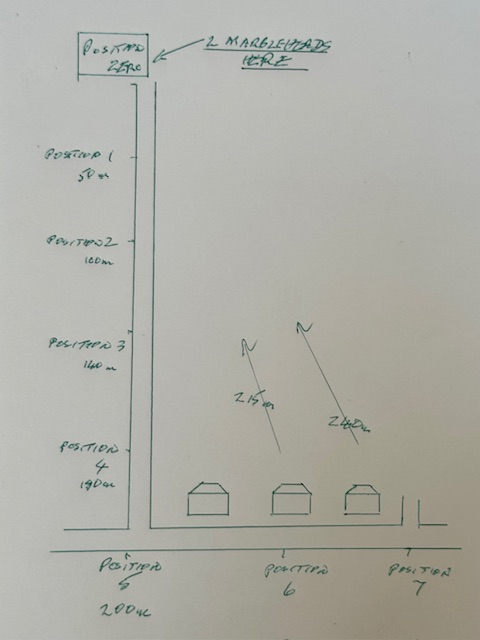
I’ve just had a bit of a shock though. You may remember that I have a horizontal, dead straight, line-of-sight, transmitter range test based in the street where I live.
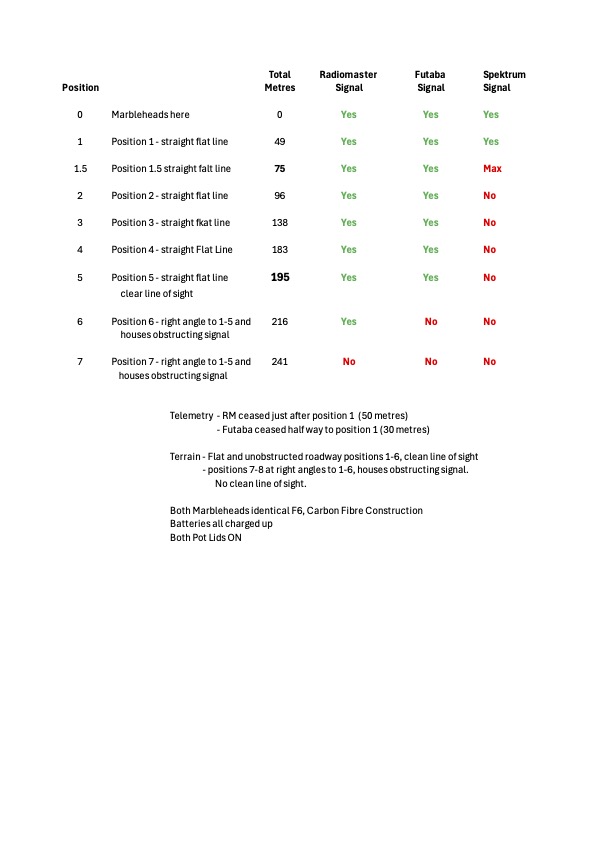
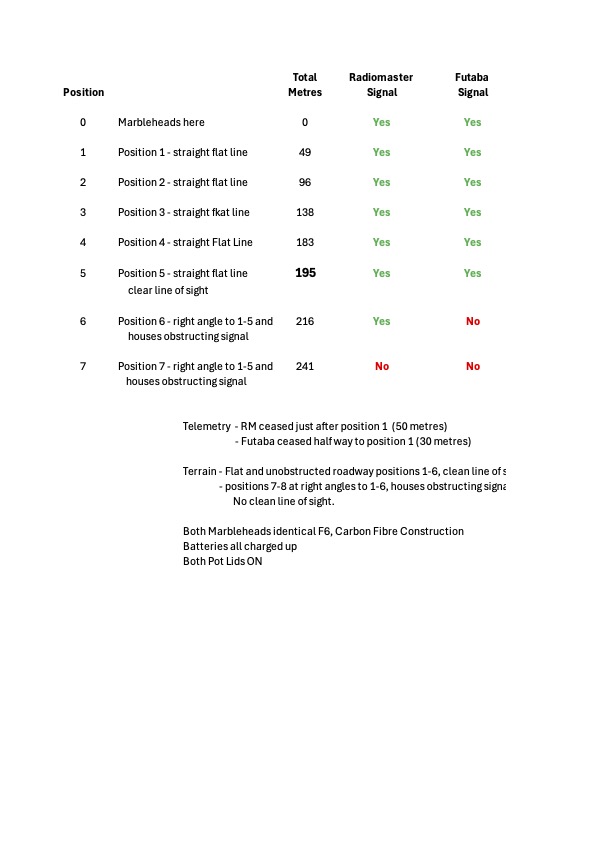
I recently put Radiomaster and Futaba through the exact same test and basically got a radio range of around 200 metres for both of them. Blimey.
Radiomaster just a tad more maybe, but I ran out of straight street and had to go round the corner. That is way more than we need in radio sailing.. I can hardly walk THAT far.
You can read my recent range comparison for Radiomaster and Futaba here:-
Tests conducted by RC Flyers in the USA suggested that Spektrum only reached maybe a quarter to half the distance of Radiomaster/ELRS. I was curious to test my DX8e against it. I am just starting to prepare the Datchet Radio Sailors’ online manual for Spektrum. I thought I’d put my own lovely Spektrum DX8/AR620 through the same range test, using the same boat…. before I start the programming and manual writing.
I’m a bit stunned. At first, I thought it must be low battery power, and so changed all the batteries for fresh ones. Same result. So my next thought,… after swearing,… was “faulty transmitter”…. (you might say!!) …. but I’ve had this particular DX8 range tested and a fix applied at the Spektrum UK distributor, and it passed their tests just fine after that.
You might be thinking that it was caused by the smart but tiny, and wire free, ceramic antenna of the AR620 receiver. Maybe. Lovely kit though.
But the Radiomaster in this test also used a ceramic antenna in its ERC3i – even more weeny and more tiny that is. It’s so small, you’d be inclined to try and wipe it off the hull in case it’s a speck of mud.
The AR620 is about twice the physical size of the ER3Ci. When I get the time, I’ll re-test the Futabas without the SailsEtc antenna frame … just dangling wires in the pot … to be disproved, but I personally suspect the antenna frame (called “aerial holder” at SailsEtc’s website) is a big factor in this test.
I’m reluctant to trot down to TJD Models and buy a wire-antenna Spektrum receiver, as I’ve seen an official Spektrum video claiming that the ceramic antenna has better range.
But – well, how much do we need in radio sailing? I’d personally have difficulty racing 75 metres away – it’s surprising how far that is. I know a number of radio sailors who simply adore their Spektrums… but for myself, I’m still surprised by this test result. The guys at Datchet want me to test a FlySky over the same street. I’ll do that as soon as it’s practical – I no longer have a FlySky here, but I know where to get a loaner.
The article showing the results of the USA flyers can be found here:-
We have had lots of Club chatter over the months/years about radio range, losing signal to the boat and so on… the merits of different transmitter brands etc. Remember, you can lose radio contact with the boat for SO many reasons.
You’ll all know that Flyers in free sky find they get simply massive radio range and quote exciting numbers stated in whole kilometres – 10 km not being unusual.
What range do we need in radio sailing? 100m maximum I should think. Nonetheless, “who gives the strongest signal and furthest range” continues to intrigue us.
We have had Club members trialling ceramic antenna based receivers (no dangly wires) from Spektrum and Radiomaster ELRS. These dinky little receivers are great in a sailboat “pot” with zero wires from a space management viewpoint. They were though designed/optimised for indoor car racing – all very different. The Futaba equivalent wire-free receiver actually states a maximum 70m range, so I’ve not bothered to test it.
A unique combination of circumstances came up this morning. Two identical, carbon fibre hulled F6 Marbleheads, one with Radiomaster TX15 and ELRS (ER3Creceiver). The other rigged with Futaba T10J and their cable antenna F3006SB receiver…. fitted in a SailsEtc antenna frame that tucks it neatly at the pot top,… wires at 90 degrees as recommended by Futaba. …Plus no rain!! …Plus a spouse who was willing to help by watching boats out of the kitchen window (very rare treat!). All batteries were fully and equally charged. Transmitter power/strength settings, transmission packet rate, were as they were to-of-the-box and new.
We sail on dead flat reservoir water, so with a solid surface beneath us, not free sky. Clear line of sight to the boats, no obstructions. Today’s tests, Positions 0-5, were similar really – carried out on a dead flat street, 200metres long, with line of sight to the boats. Then the next two measurement points I had to turn 90 degrees at the the road junction and walk along that street (measurement points 6 and 7). Measurement points 6 and 7 therefore lost line of sight, and gained a couple of houses in the way of the signal…. they were quickly more challenging to the radio, but I wanted to see which brand gave up first, and was it actually a “close thing”?? Measurements stated for position 6 and 7 were direct back to position 0, as the bird flies.
Measurements were taken via What3Words and a website named grid reference finder.
Conclusions
Nearly exactly the same range for Radiomaster ELRS and Futaba, around 200m. Easily enough for radio sailors and probably double what we might usually need.
Radiomaster lasted maybe 10% further (20m) than the Futaba.
Both lost signal by 240m. (Needs to be tested in a straight line at the reservoir.)
Despite being an indoor wire-free receiver, the RM ERC3i unit performed very well against the Futaba.
If I had patience I would test the Futaba again without the antenna frame. It would be interesting to see if dangling free wires into the pot (carbon fibre hull remember) makes any real impact on range.
Telemetry range was disappointing in both cases. Radiomaster gave up at around 50-60metres. Futaba lost telemetry signals at around 30metres. I believe the flying community call it “Fly By Telemetry”.
Good job we radio sailors are not interested in ranges of 10km away. No chance….
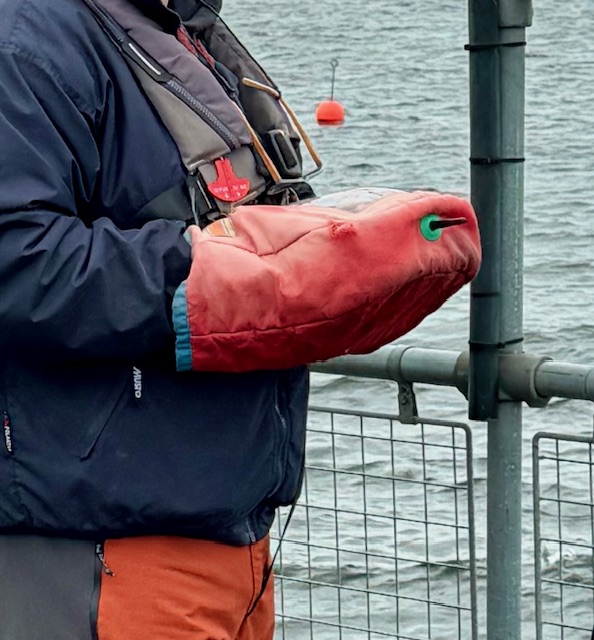
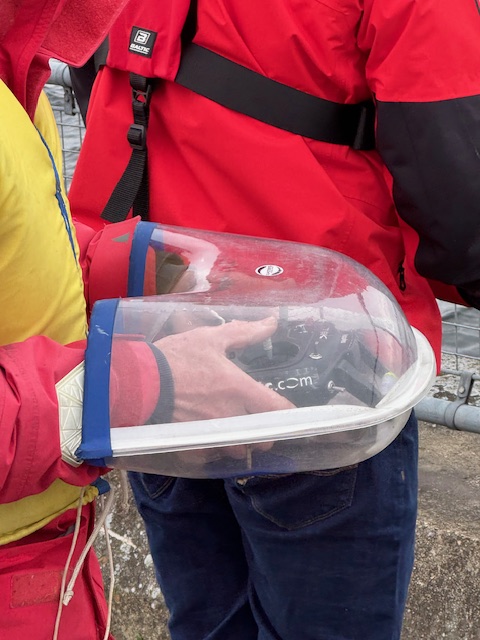
Radio Sailors really can put a lot of thought into transmitter snugs. This brilliant one above, used by our Champion DB, looks like it has an exit for the transmitter aerial… Interesting!!
This second example looks totally amazing, but when you realise it is being used by one of our most ‘decorated’ champion radio sailors it gets your mind whirling as to what thinking is being poured in here.(!)
If you’re in a warm climate and don’t use a transmitter snug, consider that one of the most amazing and competitive sailors in UK likes to keep his fingers and switches out of sight, so that competitors can’t get to see what is going on in there. All you hear is a “click-click”. I love it. Fabulous gamesmanship. (See the story of Rodney Pattisson’s Centreboard aileron trim tab on Superdocious… allegedly simply done to distract competition!)
(Note snazzy BG logo sneaking in at the top of the photo to remind you that at least two of the greatest minds in sailing have thought about the design of this snug!)
Do you live somewhere with a climate where the idea of a transmitter snug doesn’t really apply?? Well, here in UK, we use them a lot !!
I saw Rob V with one of the new Rooster Snugs from Steve Cockerill (see above). Very nice it looked too. They make some really nice sailing products at Rooster, so this bodes well !!
There happens to be three different makes of snug in the workshop at the moment. Want to see the differences of design?? Read on….
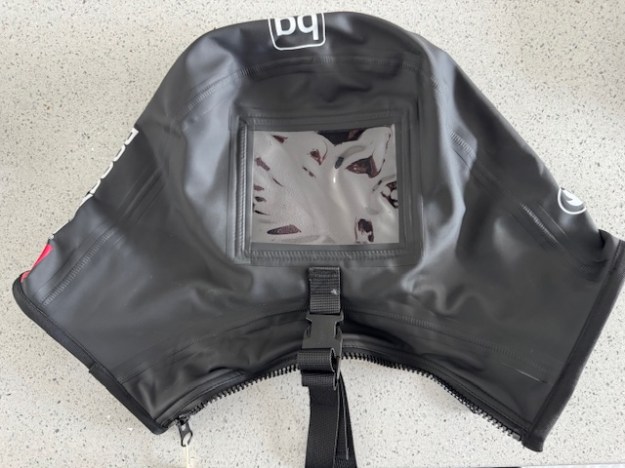
Since I started radio sailing, I’ve only used a Catsails snug (see above). I borrowed one with a loan boat for a year, then simply stuck with the same. I like it. You’ll see lots of them around – a good well made, well designed, sturdy product.
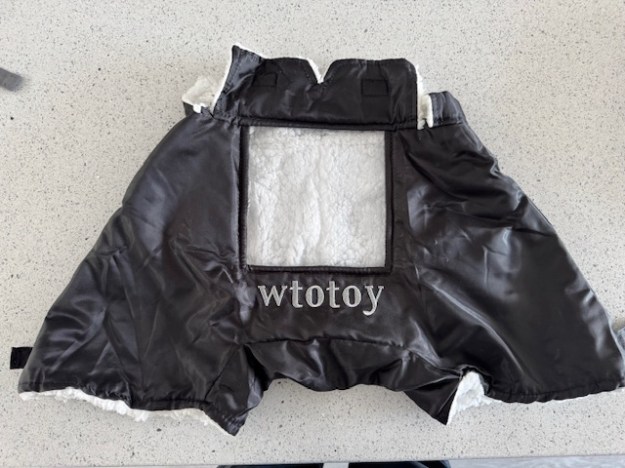
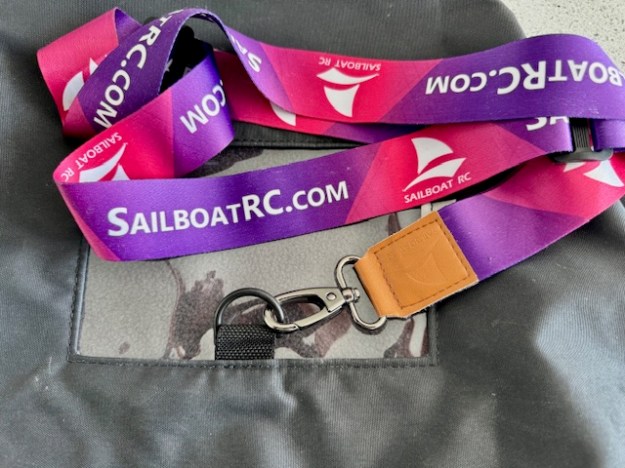
I also have a snug from Wtotoy which I got from SailboatRC with the IOM. I hear that SailboatRC might be about to produce their own design – watch out for that. To be honest, I don’t take to the Wtotoy at all, but it does teach a lot about what sets Catsails and Rooster apart.
When you go to choose your next snug, here are some things to look out for:-
Transmitter Considerations – Access and Security
The Rooster and Catsails snugs both have stout strong zippers on the body-side of the snug, compared to a velcro closure away from the body on the Wtotoy snug (see photos above). Thinking through this, my guess is that you would all think the access from body side with a strong zipper was the most secure.
Rooster additionally put this little velcro storage loop inside the snug to secure your transmitter – but to what? Good for Futaba and Flysky transmitters (use the handle) but I’m less sure how to use it best on the Radiomaster Pocket or the Spektrum (slightly more awkward handle to access). Would I forget to do it after a few outings? Better to have it than not though.
Size – Big Hands, Large Transmitters?
(Top photo – Rooster on top of Catsails, bottom photo Rooster on top of Wtotoy)
I thought I had big hands until we ran our item comparing transmitters.
Most probably you’d say that your hands fit all three, but in reality these three feel very different in internal size. I have feeling that the Catsails snug is the most capacious (see photo above), but it might be deceptive. One of them would suit you better, for sure. The Rooster design comes higher up your wrists which is another consideration entirely.
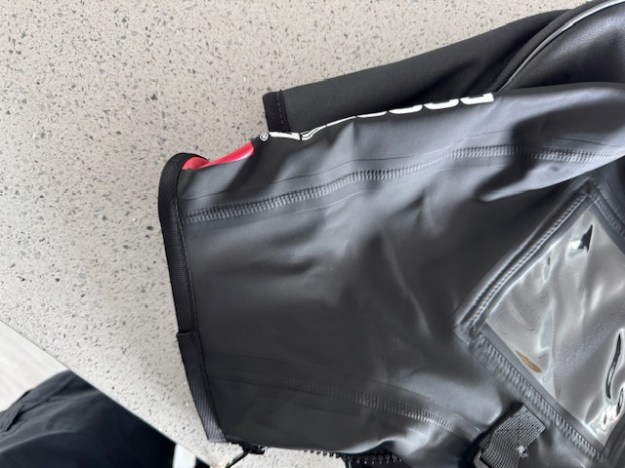
By far the most capacious of the three is the Wtotoy, and the Rooster and Catsails do tend to feel different inside. The Rooster gives a totally different impression as it is designed more to come up your wrists like a pair of gloves. The “sleeve” on the Rooster compared to Catsails is quite pronounced. (see photo below)
If you are a large hands Spektrum user (largest transmitter we have measured) , it’s a double challenge – you are going to want to try both snugs before deciding. Don’t forget your switch clearance! (see our other article)
Let’s start with the Wtotoy and dismiss this. It has no neck strap capability.
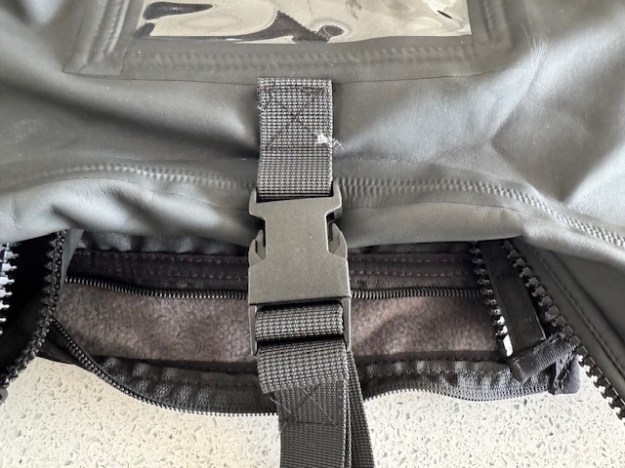
The Rooster and Catsails snugs both have an external eye, and the Rooster comes with its own neck strap and quick release buckle.
Both Rooster and Catsails brands have put the securing eye behind the viewing window, so I would guess that the centre of gravity will tilt both away from you if you take your hands off. It’ll vary a lot by transmitter (see our comparison article) weight and centre of balance, but you might want to check this out before you decide.
Weather – Warm or Dry or Both??
In Uk, we would be thinking both about keeping our transmitters dry and perhaps also keeping our hands warm. At our Club, we prefer to sail year round (maximise subscription value!) so both are a prime consideration for us. All three snugs here are made of very waterproof material, so no worries. The Wtotoy additionally has velcro adjusters at the wrists (is this a two person job?) and the Rooster is designed more like a glove to come up the wrist to improve closure.
As regards warmth, you are going to be happy with these, but consider if they would get too hot in summer. I’d guess straight away that the Wtotoy would be warmest and the Catsails the coolest, Rooster in between.
The Wtotoy has a furry lining which is not to my own preference
The Rooster and Catsails snugs both have that clever aqua fleece type of lined material which is robust and (to me) feels great.
I’ll test the Rooster and Catsails next winter to see what their thermal performance is like, but I’d gu ess by design (sleeves effect) the Rooster will be warmest and the Catsails the coolest. What would you prefer?? I confess, I’m not sure yet. When it’s properly cold, do you wear gloves too?
I’ll trial both the Rooster and Catsails snugs over the next year and try and form some conclusions then.






 Datchet Radio Sailing - Making It All Much Easier !!