Ten Raters were on Saturday – no wind though!! Commodore said they had to push the boats out then had a long drift to get them back again!! RW brought along his new Trance – what a looker that boat is !!
Then to IOM Sunday and Phil’s Report :-
Low water level today meant we could walk along the lower beach on the North shore, by next week we should be able to drive down to the waters edge.
The first sighting at Datchet of the new VISS design from Sailboat RC – yes, Nigel’s new beauty has arrived !!
Eight IOM’s today including guests Ken McAlpine and Harry Neil. Shifty light winds and lack of buoys to set a good course didn’t make life easy but Craig (Proteus) , Nigel (Viss) , Dorian (Britpop) and David (V12) dominated at the front of the fleet.
First couple of races didn’t get scored (Jim did well !!) while boats were sorted and tweaked but we did score four races before adjourning for lunch. Craig, Nigel and Dorian practiced after lunch while Phil & Jim recovered a few of the grounded marks and reset them further into the lake.
To read more about Nigel’s VISS, click the following links.
One of the things that immediately strikes the new entrant to Radio Sailing is the sail numbers. It’s not like big boat sailing at all !! By the way, the size, spacing and gaps of the numbers and country characters are quite carefully controlled in the International Racing Rules – see the radio sailing appendix.
Very quickly you will see that restricted by space on the sail, and as a general rule, we only use the last two digits of the hull number which should also be clearly shown on the boat…. so we all hope within 100 numbers we shall not to have any duplicates at an Event or in Club Racing. Of course, duplicates can arise in a race and on entry the PRO might ask one competitor to add an extra digit, by convention a “1”…. so that competitors can be easily told apart. A “1” is relatively easy to fit in to the space available. Remember this requirement though when you prepare to attach your sail numbers to the sail – leave a bit of space!!
If you think about it, a very small group of number combinations can be ambiguous when viewed through either side of the sail. I must admit, I’ve been caught out as a finish-line judge on a bright sunny day by this. By convention, skippers with such numbers can consider whether they also should pop a “1” in front of their number.
So if you have just one boat, one class … as most of us Club Racers do… then all that’s sensible and fine. Even if you have two or more boats, no problem really.
For multi-boat owners, there’s also another option – personal sail numbers. Each MYA district keeps a district register of 100 numbers and if there is one available you get to keep a two digit number for several years in exchange for a fee. All your boats can then bear that number on their sails. There are some things to think about:-
Is the number you are allocated already in use in your Club Fleet or in the Open Meeting Fleet in which you race? (Availability is rare, so in all likelihood you simply take the number that is offered. ) It might determine if you wish to go this way or not.
Realistically, and for re-sale purposes, you are going to want to go with stick-on sail numbers. SailboatRC say that using indelible ink is the only sensible option, but I must say that is not my experience so far. In addition to indelible pen based numbers, I also have stick-on numbers from K7yachts. No problem with those so far.
Is that it?? Not quite…..
If you are going to race Marbleheads and Ten Raters, they can share the smaller rigs. As most of the cost lies in the rigs, lots will have this on their minds. So obviously having the same number on each boat is going to help life a lot. At a club like Datchet which races both Marbleheads and Tens, this is a pretty topical idea – after all the excitement about the hulls, most of the money is in the rigs.
You can imagine that as the sport grows, the demand for personal sail numbers soon outstrips supply. Below, I attach a recent announcement for Metropolitan and Southern District that they are going to introduce another bank of 0-99 numbers to help meet demand. We had some chatter at the Club about why there’s no “1” on the front (or similar idea), but we have policy and practice to help with duplicates in any event, so it’s good to see MYA innovating its way forward on the subject.
We had something of an “ah ha” moment here the other day when the Domestic Steering Committee (a seamstress of note), reminded me that transmitters and snugs are a 3-dimensional design challenge not easily thought of or seen in 2D…
We went back to the snug and transmitter inventory and tried all combinations of transmitters and snugs to see if basically it really is “choose anything you want”. If you’re a Flysky or Futaba user, you might get an “ah ha” moment too.
First up, when I use my Radiomaster Pocket I realise now I’ve always tended to use it without a cover. The transmitter is so ridiculously robust I suppose it felt best to use it in the open air. It was anyway so small it is lost inside a snug.
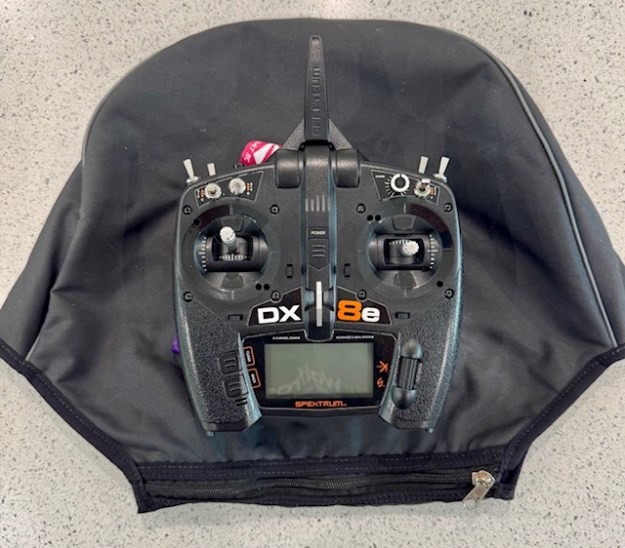
The second really important thing is that my fabulous Catsails snug is a terrific cover and will basically take anything you want to pop in there with ease – with a Spektrum it can easily accommodate the stubby aerial at any angle you prefer.
It’ll be interesting to see what SailboatRC come up with in their forthcoming snug design.
What’s the Thing About a 3D Snug Design?
It’s in the implementation….
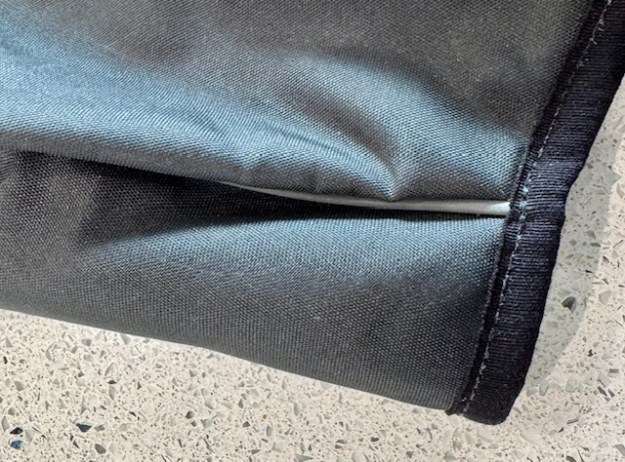
The Steering Committee’s head seamstress pointed out there are differing approaches here to creating a 3D space for the transmitter. Catsails are basically using what a dressmaker thinks of as “darts”… apparently… there’s a single seam with different material sizes each side of the seam causing a ‘compartment’ effect.
The Rooster…
That brings us to the Rooster…. with a different approach to creating a 3D shape based upon multiple seams. They are creating the 3D space more by design with seams along the edges of the 3D space. (see photo at the top of this article)
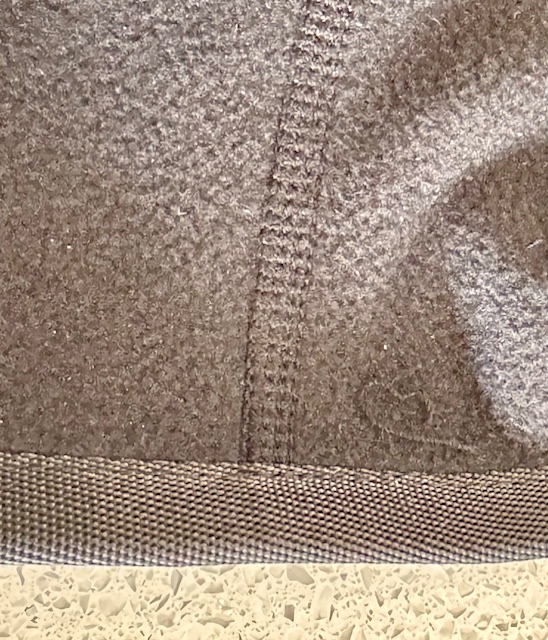
Can you see there are four seams on the Rooster?? Taped flat on the outside (the Catsails outside seam is “piped”) and also miraculously also flat on the inside for comfort maybe…
In sewing, this is apparently called “flat felling” or “flat locking”. Just so you know…
Given the two people that will have had a big hand (sic) in designing the Rooster snug, it suddenly comes as no surprise to me now that the Rooster 3D space is a really great fit on Flysky and Futaba, like it was designed for them. Like a glove….. My lovely Spektrum is a better fit in the Catsails snug. The antenna stem is something of a compromise inside the Rooster. Enjoy choosing!





 Datchet Radio Sailing - Making It All Much Easier !!