
How far away can we see race marks, start line situations and sail numbers? Not far.
I’ve just had a bit of a shock though. You may remember that I have a horizontal, dead straight, line-of-sight, transmitter range test based in the street where I live.
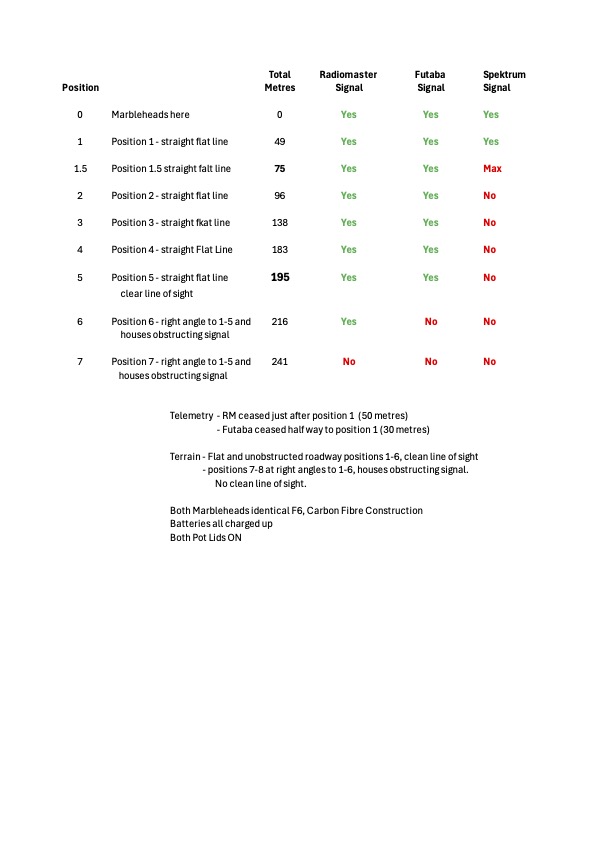
I recently put Radiomaster and Futaba through the exact same test and basically got a radio range of around 200 metres for both of them. Blimey.
Radiomaster just a tad more maybe, but I ran out of straight street and had to go round the corner. That is way more than we need in radio sailing.. I can hardly walk THAT far.
You can read my recent range comparison for Radiomaster and Futaba here:-
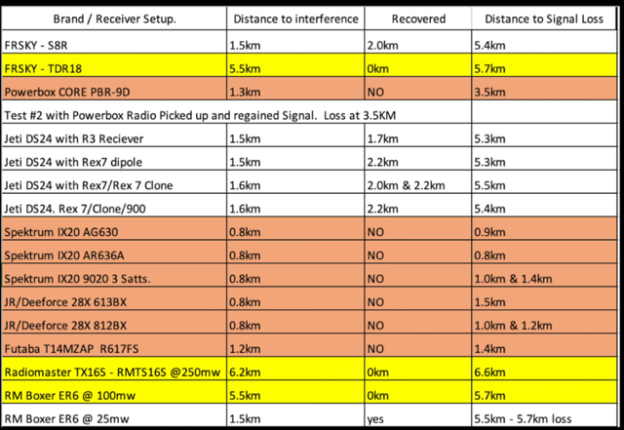
Tests conducted by RC Flyers in the USA suggested that Spektrum only reached maybe a quarter to half the distance of Radiomaster/ELRS. I was curious to test my DX8e against it. I am just starting to prepare the Datchet Radio Sailors’ online manual for Spektrum. I thought I’d put my own lovely Spektrum DX8/AR620 through the same range test, using the same boat…. before I start the programming and manual writing.
(©Datchet Radio Sailing)
I’m a bit stunned. At first, I thought it must be low battery power, and so changed all the batteries for fresh ones. Same result. So my next thought,… after swearing,… was “faulty transmitter”…. (you might say!!) …. but I’ve had this particular DX8 range tested and a fix applied at the Spektrum UK distributor, and it passed their tests just fine after that.
You might be thinking that it was caused by the smart but tiny, and wire free, ceramic antenna of the AR620 receiver. Maybe. Lovely kit though.
But the Radiomaster in this test also used a ceramic antenna in its ERC3i – even more weeny and more tiny that is. It’s so small, you’d be inclined to try and wipe it off the hull in case it’s a speck of mud.
The AR620 is about twice the physical size of the ER3Ci. When I get the time, I’ll re-test the Futabas without the SailsEtc antenna frame … just dangling wires in the pot … to be disproved, but I personally suspect the antenna frame (called “aerial holder” at SailsEtc’s website) is a big factor in this test.
I’m reluctant to trot down to TJD Models and buy a wire-antenna Spektrum receiver, as I’ve seen an official Spektrum video claiming that the ceramic antenna has better range.
But – well, how much do we need in radio sailing? I’d personally have difficulty racing 75 metres away – it’s surprising how far that is. I know a number of radio sailors who simply adore their Spektrums… but for myself, I’m still surprised by this test result. The guys at Datchet want me to test a FlySky over the same street. I’ll do that as soon as it’s practical – I no longer have a FlySky here, but I know where to get a loaner.
The article showing the results of the USA flyers can be found here:-
 Datchet Radio Sailing - Making It All Much Easier !!