New member, Andrew G, has pointed me to this great and useful DF95 video about waterproofing your onboard receiver and other onboard electronics using “Corrosion X”
One of the notable things to me is that they are using a pointed 1oz dropper bottle to dispense the fluid. It looks like in North America 1oz dropper bottles of Corrosion X are easily available. At the time of writing, in UK I haven’t found this product packaging. The same company are doing a fishing reel lube called SpeedX in a 1oz dropper bottle, but that seems to be it.
I’d rather have some small amount of Corrosion X in the boat tool box and with me all the time. I find through past experience that if the cap comes off those dropper bottles it will leak everywhere. Instead, I am going to try one of these (very cheap on Amazon)
It has quite a pointy end on the pipette which I thought might be better for this particular job, than the ones with olive oil to stick in your ear! And once that lid is screwed in, I reckon you are going to be safe against leaks in transit. The bottle size I chose is 50ml… so about 3 tablespoons – that should easily be enough for radio sailing.
I’d heard a lot about this subject as a beginner. It must happen a lot !
As you may have seen on the website yesterday, during the Marblehead Rankings Nigel B lost radio contact with his F6.
It turned out to be “damp in the electrics”. We had only one discard in the day, so it was really important for Nigel to diagnose and fix it quickly. This is what he did (very rapidly!):-
1/ Boat on to the stand, pot lid off, and quickly verify power in the boat and especially at the receiver because the receiver’s LED was glowing green. Waggle the two joy-sticks to determine what was working and what was not working.
2/ Sure enough, for Nigel the rudder was not responding, but the mainsheet was OK. Conclusion = not a complete closedown and there is power in the boat. Good news.
3/ LED was green so that tells you it’s in the rudder setup somewhere. Where to look next?
4/ Statistical guess : rudder servos don’t fail all that often, so the connection where the rudder circuit joins the Receiver is number one suspect. Pull out the connector to channel one and have a close visual inspection which revealed the wicked glint of moisture.
5/ I’d heard about a product called “Corrosion X” before, but not seen it in action. It looks like WD40, may be a bit thicker perhaps. It is supposed to do all the WD40 type things plus be the best water dispersant and repellant that money can buy,… safe on electronics especially. Anyway, out comes Nigel’s Corrosion X aerosol from the van, …squirt squirt…. deep into the connectors of the receiver… right “in” there….I must say Nigel was not afraid to be generous. Then a good blow to help the excess away. I don’t think it needed a moment to dry or anything like that.
6/ Plug the rudder circuit back into the receiver, checking the plug is the correct way around (!!), instant fix !! Waggle joysticks and “job done”!!
7/ Pot lid on – go racing !!!
Lessons :-
a) I think GH uses Corrosion X as a regular setup tool (not just a “fix”) on the electrics. Interesting.
b) someone in the car park probably has a can of Corrosion X, but I resolved to get a 250ml can from Amazon and keep it in the car….. WRONG!!
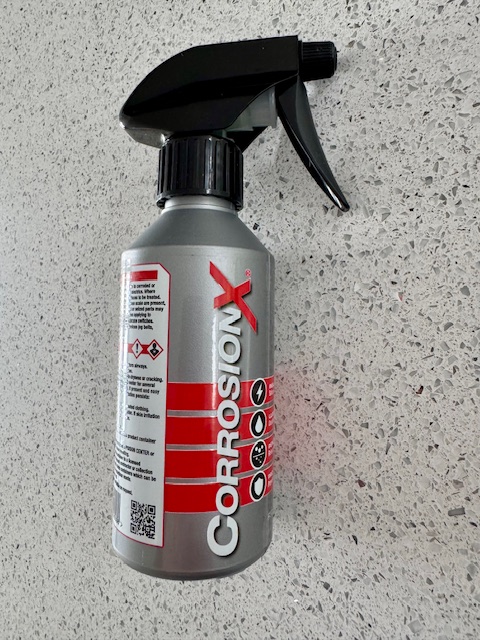
This photo above is the smallest, cheapest Corrosion X unit on Amazon. Obviously to all of us, 250ml will last a radio sailor several lifetimes. However… I made a mistake because that trigger on the can is NOT an atomiser. Squeeze the trigger and there’s only one adjustment size…. A thick rod of lubricant shoots out – honestly one squirt would make an entire Chieftain Tank very slippery !!
You actually want the smallest aerosol can that you can find online. (see Nigel’s in the top photo). Eventually I had to go to the manufacturers own (UK) website and order it there. 475ml was the smallest aerosol …so two friends can share one, each for a lifetime. Shipment from amazon is free of course, but CorrosionX use Fedex so your total price is bumped up a lot. 475ml was though near the same price as 250ml with the trigger on top, so keep a sense of humour and sense of proportion about the whole thing!!
If you know anyone with a Chieftain Tank, let them know I have something for them….
Do you think radio control aircraft flyers ever get cold hands?? I’m beginning to wonder…
Maybe they don’t!! Radio Sailors on the other hand usually do want some warm, dry, hand protection and it’s extremely usual for us to use “Transmitter snugs” to keep our fingers warm !!
Our transmitters are generally model aircraft transmitters and we use a tiny proportion of their capability in Radio Sailing. Not all of them come with switches for aircraft pilots to play with, but the more you pay the more switches you will see on there. Lets be clear – far fewer radio sailors use ANY of the switches, but if you find yourself tempted quite possibly your transmitter is festooned with the them..
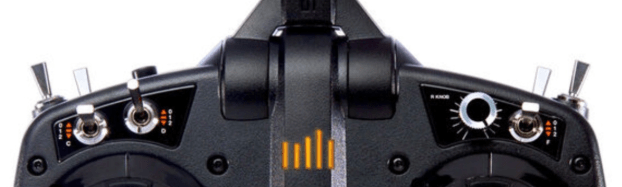
By “switches”, I am referring to those little silver spikey things such as the ones you can see in the photos above. If you are tempted to try one of these switches for sailing, then read-on.
In way of a suggestion, consider whether when inside a “transmitter snug” the switches can get inadvertently flicked/activated by the very material that is keeping your hands warm. Certainly when you take your hands out of the snug and perhaps place the transmitter to one side, you are open to this happening.
It won’t happen on the Radiomaster Pocket (switches safely recessed) but Flysky, Spektrum and the Futabas generally have them running along facing you on what I think of as “the top” …. meaning the console where the joysticks are located. Futaba and Spektrum also have switches on the back panel, slightly hidden away from you. To make it more interesting there are often two different switch arm lengths. What I have been finding is that the longer switch arms (lovely action!!) are the ones that can snag on the inside of the transmitter snug. When it happens, it’s quite difficult to spot until something doesn’t work on the boat as you expect…. usually at a crucial moment!!
The Flysky I tried at the weekend additionally needed those switches all in the off position just to power up successfully. The Flysky only has switches along “the top” if I recall correctly. (see photo above)
So my suggestions if you really, really want to try switches would be :-
1/ Choose the short stubby switches if you can, as they are often “protected” against snagging by a tall switch located next to them.
2/ Consider only using short stubby switches on the back panel if it fits your way of thinking. A reduced chance of snagging back there….
3/ If you get cross, don’t throw away that transmitter snug!!