Category Archives: Beginner’s Topics

Beginner’s Guide to… Mainsheet Posts..!!

There’s enough to get your mind around when you start radio sailing, isn’t there?! You take some pieces of kit for granted naturally (!).

Probably within one or two outings, you’ll have adjusted, or simply fiddled with, your mainsheet post and perhaps wondered, “What’s down there?”…. “can you adjust the friction?” etc

Probably most of us (UK) are using Sailsetc mainsheet posts. Both mine are made of a kind of slippery PTFE type material and the crucial thing above deck are the entry and exit holes.

https://www.sailsetc2.com/index.php/sheet-post.html

On my IOM, the post is at a racy angle,… and on the Marbleheads it is simply vertical.

The post slides snugly into a tube below deck. What’s underneath?? Well, carefully slide it out and let’s take a look at what you will see…..
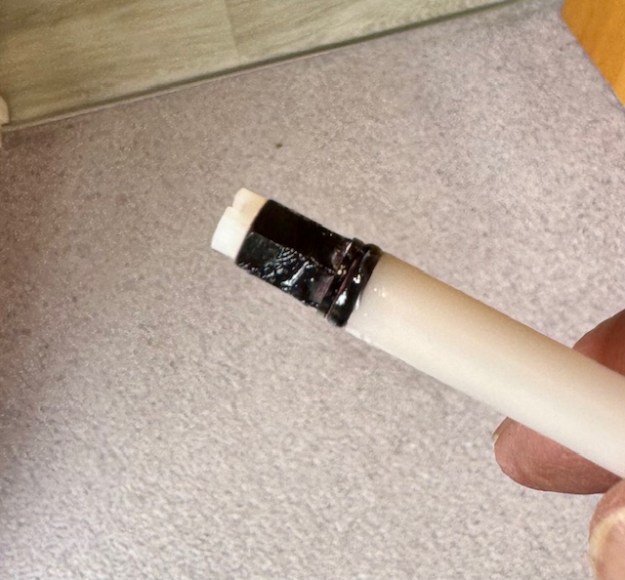
The most crucial thing is that you will immediately see how to adjust the sliding friction. Your post might feel just right and hold its position. You probably know that the general idea is (1) adjust the post as high as is feasible on sailing day so that your mainsheet run to the boom is near horizontal (2) on a gusty day, consider sliding the post down little to make the rig slightly more springy.

There are three components down there:-

A nylon bolt (white in this example) which screws into a pre-tapped hole in the bottom of the post. On this one, you just need a flat head screwdriver or a weeny spanner.

There’s your first adjustment right there. The limit of how far you can push the post down the tube is set by that screw head which will sit at the bottom of the tube in its furthest down position. The further you screw it in, the lower your post can sit.

On the post is an adjuster nut (black in this example) then a little rubber washer on the end. There’s your second adjuster. The tighter that nut screws the rubber washer to the bottom of the post, the more the rubber washer bulges…. the more it presses on the wall of the tube… the stiffer your height adjustment gets.

That’s it !! Pull your post out and take a look!! Clever in its simplicity.

A story of a third adjustment:

We may be wrong, but yesterday it looked on my Marblehead B and C rigs as if my mainsheet post did not quite want to go down low enough. It was catching the boom on both rigs as they travelled across, and I couldn’t quite deploy enough kicker to close the leech enough… so I had a free leech kind of sailing day.

I was hoping to simply screw the adjuster in a couple of mm’s to get the minimum post height down a bit. No such luck…. the screw was right in. So in a fleet conference (!) we resolved that I should instead take 5mm off the post.
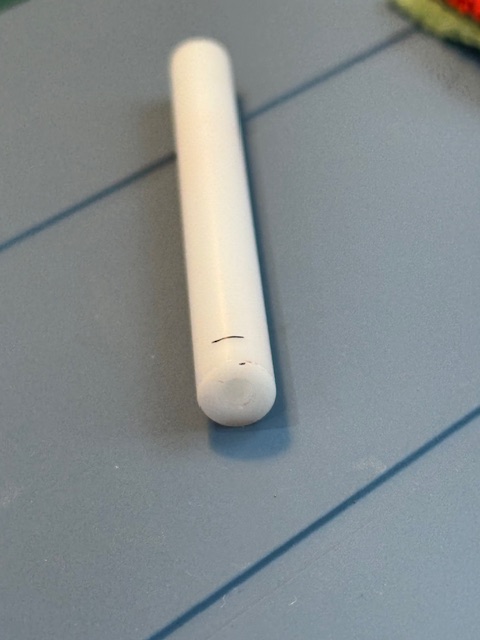
See that little black mark on the post casing above?

You don’t want to go lower than the exit eye clearing the deck (see top photo), but there’s essentially lots of adjustment available in the tube once you get the limits right.

In a gentle vice, I found it reasonably easy to cut with a very fine hacksaw and cleaned up with a file. Taking 1-2mm off would have been tricky, but 5mm was fine.

Then, as you’d guess (Murphy’s law applies), the screw hole wasn’t quite deep enough to get the adjuster screw in. I didn’t fancy making the hole deeper and re-tapping the thread. There was a generous amount of thread showing on the bolt, so I resolved to take 5mm off the end – a Stanley knife and a snipper did the job rather nicely.

Should be OK – we need another 15mph gusting 30mph day to give it a trial run.

Transmitter Type and Snug-Cover, Best Fit…..!!

We had something of an “ah ha” moment here the other day when the Domestic Steering Committee (a seamstress of note), reminded me that transmitters and snugs are a 3-dimensional design challenge not easily thought of or seen in 2D…

We went back to the snug and transmitter inventory and tried all combinations of transmitters and snugs to see if basically it really is “choose anything you want”. If you’re a Flysky or Futaba user, you might get an “ah ha” moment too.

First up, when I use my Radiomaster Pocket I realise now I’ve always tended to use it without a cover. The transmitter is so ridiculously robust I suppose it felt best to use it in the open air. It was anyway so small it is lost inside a snug.

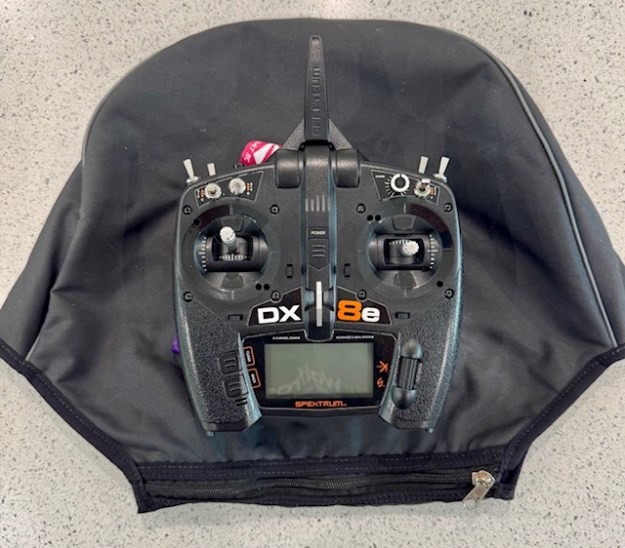
The second really important thing is that my fabulous Catsails snug is a terrific cover and will basically take anything you want to pop in there with ease – with a Spektrum it can easily accommodate the stubby aerial at any angle you prefer.

It’ll be interesting to see what SailboatRC come up with in their forthcoming snug design.

What’s the Thing About a 3D Snug Design?

It’s in the implementation….

The Steering Committee’s head seamstress pointed out there are differing approaches here to creating a 3D space for the transmitter. Catsails are basically using what a dressmaker thinks of as “darts”… apparently… there’s a single seam with different material sizes each side of the seam causing a ‘compartment’ effect.

The Rooster…

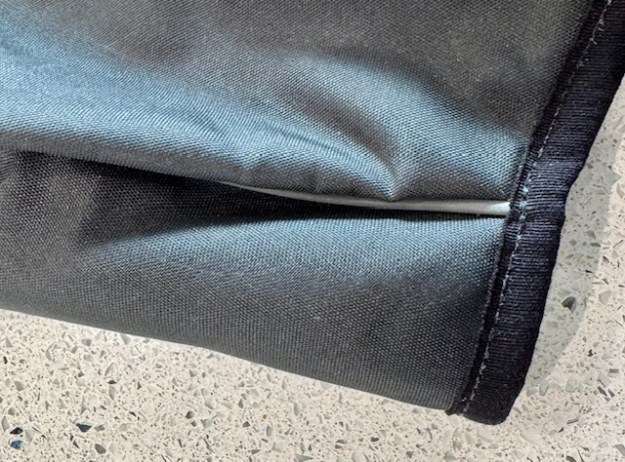
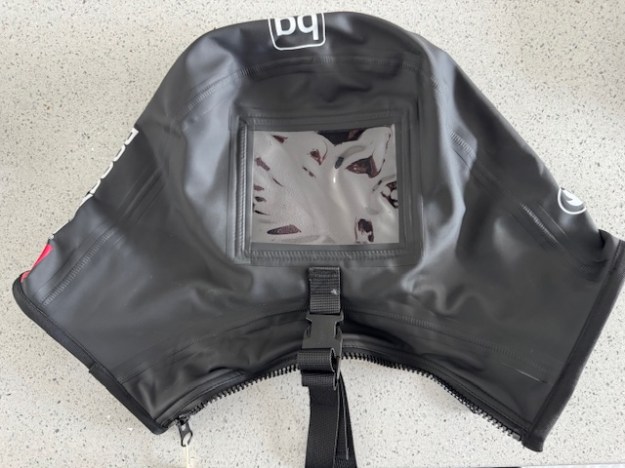
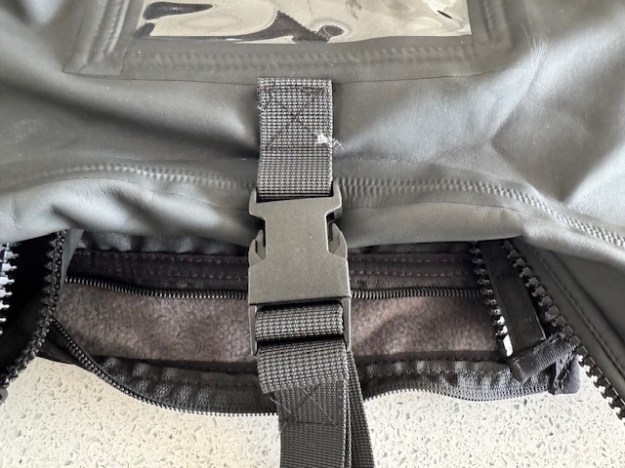
That brings us to the Rooster…. with a different approach to creating a 3D shape based upon multiple seams. They are creating the 3D space more by design with seams along the edges of the 3D space. (see photo at the top of this article)

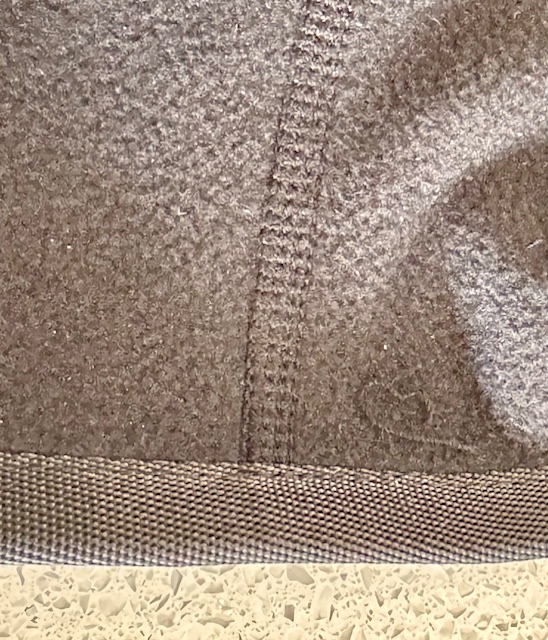
Can you see there are four seams on the Rooster?? Taped flat on the outside (the Catsails outside seam is “piped”) and also miraculously also flat on the inside for comfort maybe…

In sewing, this is apparently called “flat felling” or “flat locking”. Just so you know…

Given the two people that will have had a big hand (sic) in designing the Rooster snug, it suddenly comes as no surprise to me now that the Rooster 3D space is a really great fit on Flysky and Futaba, like it was designed for them. Like a glove….. My lovely Spektrum is a better fit in the Catsails snug. The antenna stem is something of a compromise inside the Rooster. Enjoy choosing!

Beginners Guide : Transmitter Snugs…

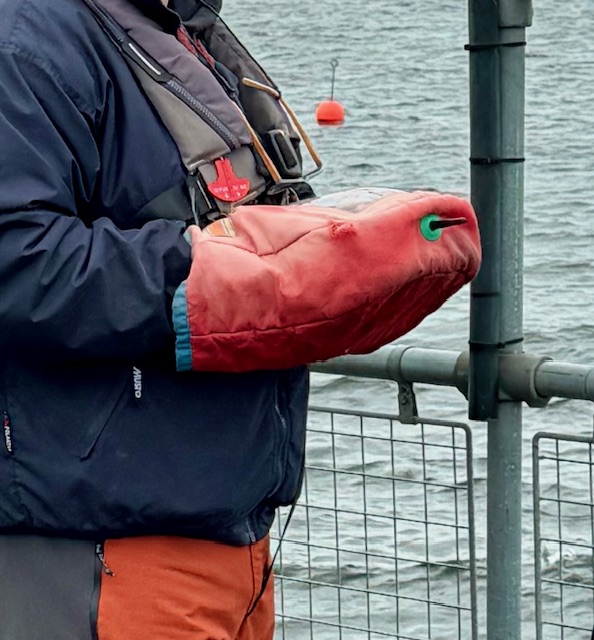
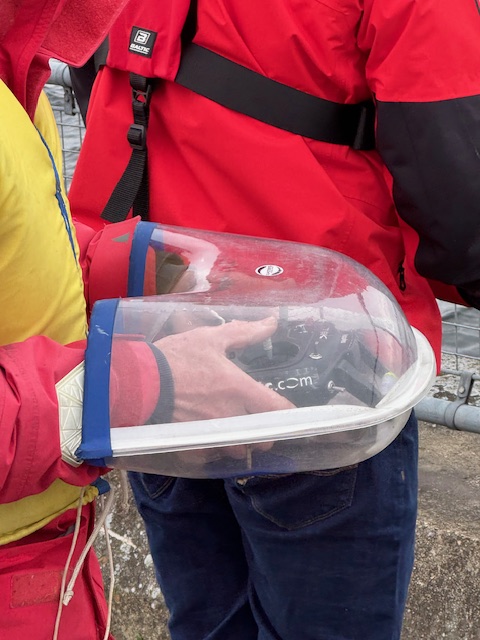
Radio Sailors really can put a lot of thought into transmitter snugs. This brilliant one above, used by our Champion DB, looks like it has an exit for the transmitter aerial… Interesting!!

This second example looks totally amazing, but when you realise it is being used by one of our most ‘decorated’ champion radio sailors it gets your mind whirling as to what thinking is being poured in here.(!)

If you’re in a warm climate and don’t use a transmitter snug, consider that one of the most amazing and competitive sailors in UK likes to keep his fingers and switches out of sight, so that competitors can’t get to see what is going on in there. All you hear is a “click-click”. I love it. Fabulous gamesmanship. (See the story of Rodney Pattisson’s Centreboard aileron trim tab on Superdocious… allegedly simply done to distract competition!)

(Note snazzy BG logo sneaking in at the top of the photo to remind you that at least two of the greatest minds in sailing have thought about the design of this snug!)

Do you live somewhere with a climate where the idea of a transmitter snug doesn’t really apply?? Well, here in UK, we use them a lot !!

I saw Rob V with one of the new Rooster Snugs from Steve Cockerill (see above). Very nice it looked too. They make some really nice sailing products at Rooster, so this bodes well !!

There happens to be three different makes of snug in the workshop at the moment. Want to see the differences of design?? Read on….

Since I started radio sailing, I’ve only used a Catsails snug (see above). I borrowed one with a loan boat for a year, then simply stuck with the same. I like it. You’ll see lots of them around – a good well made, well designed, sturdy product.

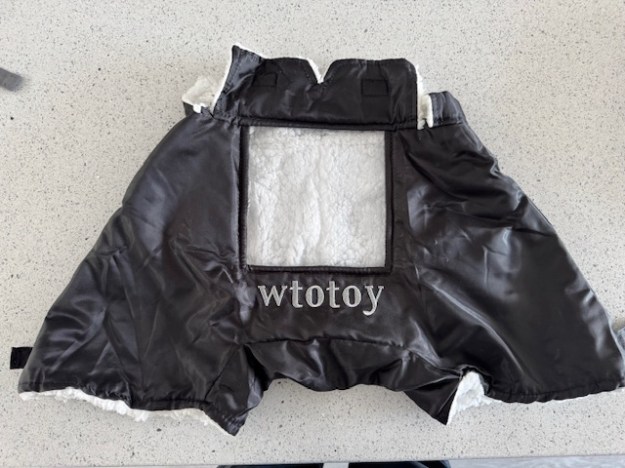
I also have a snug from Wtotoy which I got from SailboatRC with the IOM. I hear that SailboatRC might be about to produce their own design – watch out for that. To be honest, I don’t take to the Wtotoy at all, but it does teach a lot about what sets Catsails and Rooster apart.

When you go to choose your next snug, here are some things to look out for:-

Transmitter Considerations – Access and Security

The Rooster and Catsails snugs both have stout strong zippers on the body-side of the snug, compared to a velcro closure away from the body on the Wtotoy snug (see photos above). Thinking through this, my guess is that you would all think the access from body side with a strong zipper was the most secure.

Rooster additionally put this little velcro storage loop inside the snug to secure your transmitter – but to what? Good for Futaba and Flysky transmitters (use the handle) but I’m less sure how to use it best on the Radiomaster Pocket or the Spektrum (slightly more awkward handle to access). Would I forget to do it after a few outings? Better to have it than not though.

Size – Big Hands, Large Transmitters?

(Top photo – Rooster on top of Catsails, bottom photo Rooster on top of Wtotoy)

I thought I had big hands until we ran our item comparing transmitters.

Most probably you’d say that your hands fit all three, but in reality these three feel very different in internal size. I have feeling that the Catsails snug is the most capacious (see photo above), but it might be deceptive. One of them would suit you better, for sure. The Rooster design comes higher up your wrists which is another consideration entirely.

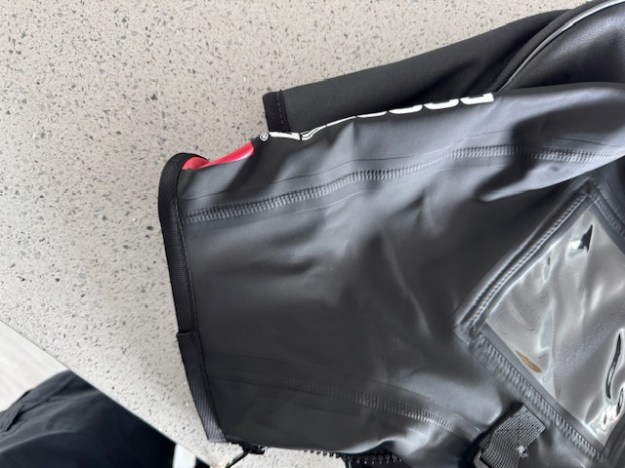
By far the most capacious of the three is the Wtotoy, and the Rooster and Catsails do tend to feel different inside. The Rooster gives a totally different impression as it is designed more to come up your wrists like a pair of gloves. The “sleeve” on the Rooster compared to Catsails is quite pronounced. (see photo below)

If you are a large hands Spektrum user (largest transmitter we have measured) , it’s a double challenge – you are going to want to try both snugs before deciding. Don’t forget your switch clearance! (see our other article)

Neckstraps and You

Let’s start with the Wtotoy and dismiss this. It has no neck strap capability.

The Rooster and Catsails snugs both have an external eye, and the Rooster comes with its own neck strap and quick release buckle.

Both Rooster and Catsails brands have put the securing eye behind the viewing window, so I would guess that the centre of gravity will tilt both away from you if you take your hands off. It’ll vary a lot by transmitter (see our comparison article) weight and centre of balance, but you might want to check this out before you decide.

Weather – Warm or Dry or Both??

In Uk, we would be thinking both about keeping our transmitters dry and perhaps also keeping our hands warm. At our Club, we prefer to sail year round (maximise subscription value!) so both are a prime consideration for us. All three snugs here are made of very waterproof material, so no worries. The Wtotoy additionally has velcro adjusters at the wrists (is this a two person job?) and the Rooster is designed more like a glove to come up the wrist to improve closure.

As regards warmth, you are going to be happy with these, but consider if they would get too hot in summer. I’d guess straight away that the Wtotoy would be warmest and the Catsails the coolest, Rooster in between.

The Wtotoy has a furry lining which is not to my own preference

The Rooster and Catsails snugs both have that clever aqua fleece type of lined material which is robust and (to me) feels great.

I’ll test the Rooster and Catsails next winter to see what their thermal performance is like, but I’d gu ess by design (sleeves effect) the Rooster will be warmest and the Catsails the coolest. What would you prefer?? I confess, I’m not sure yet. When it’s properly cold, do you wear gloves too?

I’ll trial both the Rooster and Catsails snugs over the next year and try and form some conclusions then.