
You may have read that the Marblehead Rankings at Datchet last weekend had a few wilder moments weather-wise. My goodness, Nigel B had his share of issue management on the Sunday !!
For Nigel, it turned out to be damp in the receiver pot. I shall shortly put a “Beginner’s Guide” article on the website about how Nigel went about diagnosing this particular type of “lost radio contact with the boat” occasion. It was really quick and only one race was lost – very impressive!
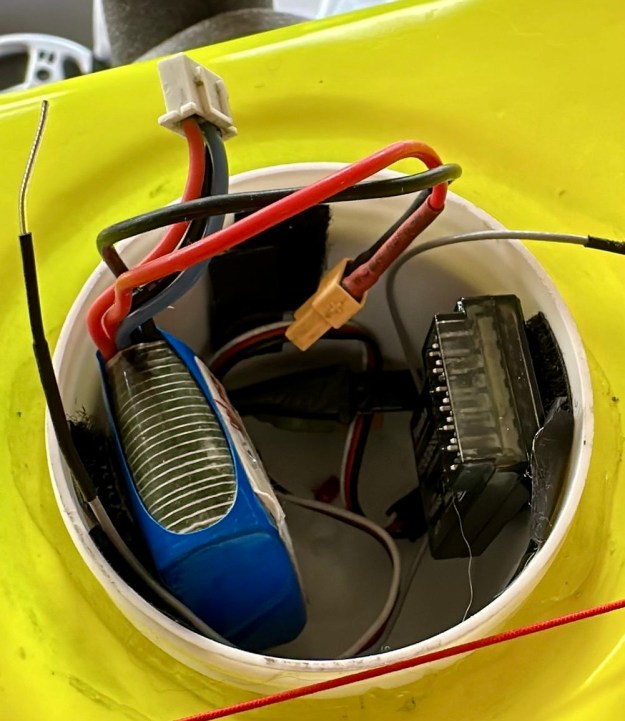
Before I do that, I thought you might like to see Nigel’s highly ordered approach to the interior of the radio pot itself.
If you take a look at the photo above, note:-
- Both battery and receiver attached to the upper side of the pot with velcro to keep them away from washing moisture in the bilge. The receiver sockets are uppermost as far away from trouble as you’d expect to get. Can you see that both battery and receiver are about as close to the lid as possible?
- Vapex LIFE battery I believe, which last time I looked means the XT30 connector is a special order item!
- Relaxed approach to antenna management – ha !! Looks neat though.
Nigel has two great additional tips:-
1/ Fit a breather pipe so that plunging a “warm” hull into cold water doesn’t suck in water through some weeny hole as it cools. GH says it can also help the hull to stop pumping the air pressure through waves. Try flexing the sides of a modern Marblehead and you’ll see what he means. The general idea of both members is that this is a great way of keeping the hull dry inside. By the way, I noted at the weekend that around half the fleet had breather pipes fitted. Many had a special little Sails-etc breather post (very smart looking sort of shark fin thing !), but on Henning Faas (spectacular) new Niou Niou it was a simple pipe buried in the deck patch. This approach is also favoured by PH and k7yachts here at Datchet.
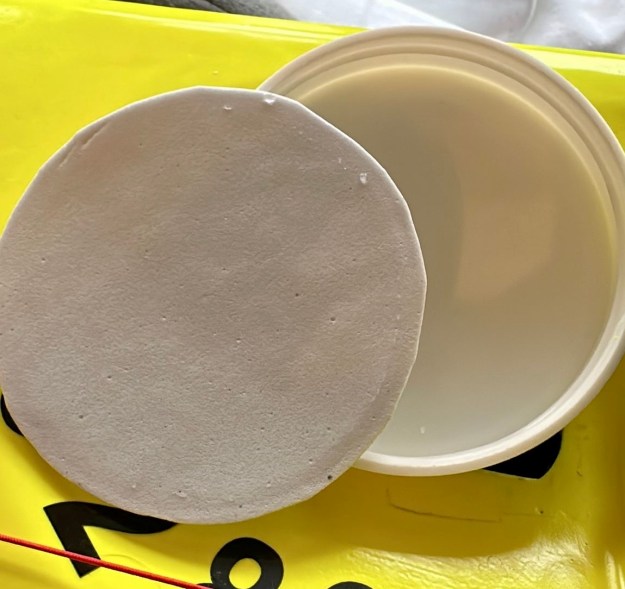
2/ The standard pot comes with a thin plastic shim which sadly does not prevent water ingress. NB says that Tony Edwards had recommended getting a sheet of 2mm foam off amazon and putting that inside the pot lid as a seal. Highly recommended as a near to perfect closure. You can see it in the photo above.
3/ I must say too that it can be a good idea to keep a little vaseline in the tool box to smear around the pot lid thread for water proofing.

 Datchet Radio Sailing - Making It All Much Easier !!