
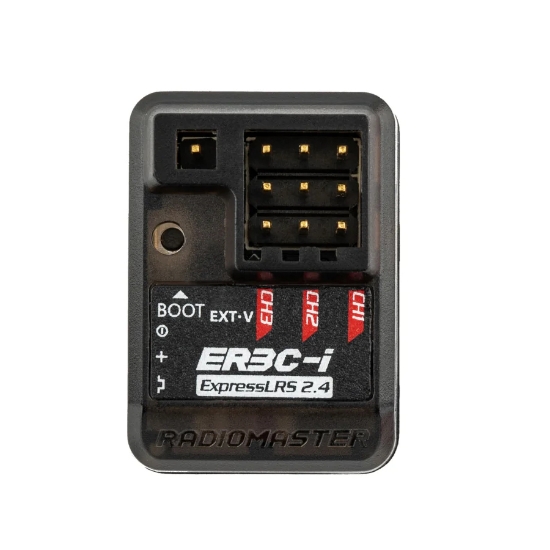
ELRS came to market in about 2021. It might have been the end of 2023 when, prompted by our Commodore, I first started googling “ELRS Range”. Back then, google would present just one or two articles – you had to hunt a bit !! In fact, if you look at the “Radio Equipment” category of this website you will somewhere find a comparison of different brands of transmitter/receivers when tested for range. It was striking, I admit.
Try googling “ELRS Range” today on your laptop, you will find as I just did, rather a lot of radio flyer forum commentary that really gets into this question.
Try this site:
https://www.expresslrs.org/info/long-range/
Some of these range claims are mind boggling stuff – if their (verified) claims are exaggerated by 10 times, you still end up with airplane/drone results that make your eyebrows go up.
To explain some of the columns in the table:
- Kms is what you expect kms to be. If we sail 100metres off the shore, I get eyesight failure!
- Packet rate is how many times per second your instructions successfully arrive at the boat from your transmitter
- Power is variable and I have read on some transmitters you can set it yourself. I believe for radio sailing 100mw would possibly be normal, but obviously the higher the power, the further the signal goes.
- 2.4ghz signals definitely go further than 900 Ghz signals
Roll my clock forward to October 2025. I think the number of our Club Members now chasing cleaner, more reliable ELRS signalling is up to four – that’s about 20% of our fleet. Interesting…. NB thinks for him it comes down to if he is sailing a carbon fibre boat or not – so a non-issue in his DF95 and One Metre collection.
AG, PH, DL and now NB…. PH has been telling us all for ages ELRS is good. NB has recently had signal drops in his F6 at the Marblehead event in Lincoln, which has him searching for radio signal improvement. In fact, you can read about it on NBs Blog page.
https://www.nigelbarrow.co.uk/post/marblehead-ranking-3-and-4-and-thoughts-on-transmitters
This all means Radiomaster of course – remembering the programming of my Radiomaster Pocket makes my head explode. However, maybe it’s time to take another look.
Did you know that on this website, our Radio Sailors Guide to setting up a Radiomaster Pocket is our most popular download manual? The latest version alone has been downloaded around 750 times globally, so probably there’s another 100 downloads to add to that. So you can take it that there is an upsurge in Radiomaster interest at Clubs across the world. NB and I have been chatting about this and concluded that it might be time for an “Advanced Radio Sailors Guide for Radiomaster” using the more modern EdgeTX touch screen transmitters …..and including every sailing feature that you will find in our “Futaba Radio Sailing Guide” (also about 300 downloads). I think our four members already on this tack might be using Radiomaster Boxers, if you want to take a look click here:-
https://radiomasterrc.com/products/boxer-max-radio-controller-m2
There’s also a new 2025 model called TX15 max, which is a little scarce just yet
Producing another Radio Sailors Transmitter Manual could be a lot of work, but let’s see how much time this winter allows.
 Datchet Radio Sailing - Making It All Much Easier !!