Category Archives: Radio Equipment

Receivers and Confined Spaces…. Part 2 !!

A few days ago we wrote about the impact of RC Flying on receivers and how we might think about them in Radio Saling’s confined spaces. First a look at some of our choices:-
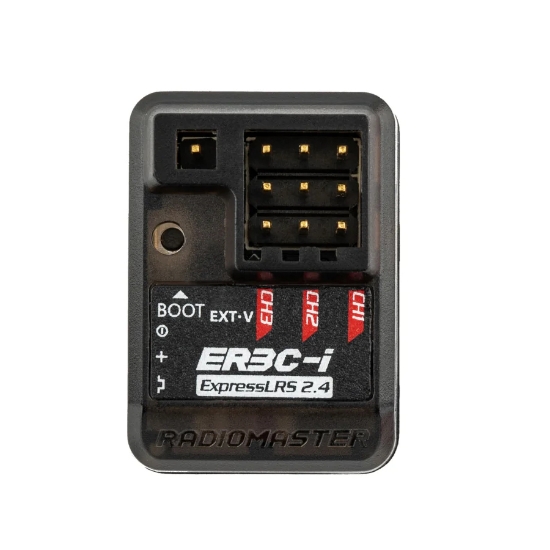
This is the dinky little Radiomaster 3 channel ELRS receiver, much favoured by our Commodore, Phil. Seriously compact little thing… you might be inclined to mount it eg on velcro on the back of the unit as photographed. So the important thing in this discussion is that the connecting leads (as you can see in the photo) will stick out at right angles to this surface.
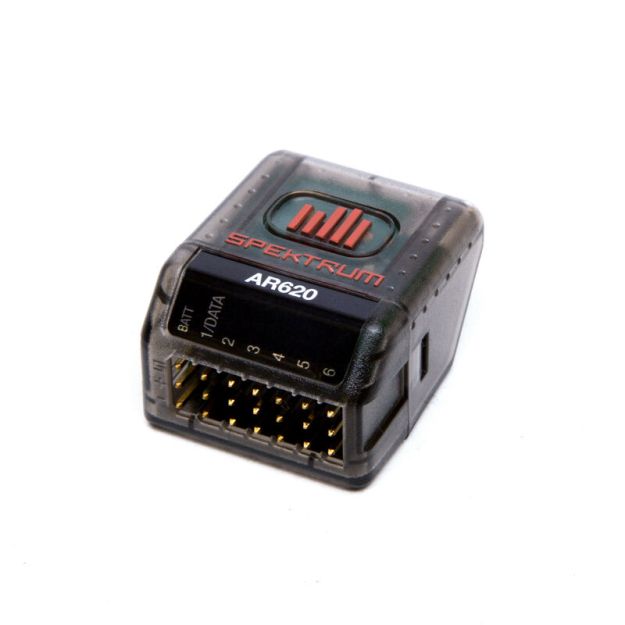
Next one is the Spectrum AR620 much favoured by Craig and Rohan. Six channels and in reality hardly any larger than the ELRS above. But note : you probably will have you velcro pad at the bottom face in the photo above, and consequently your sockets will stick out parallel to the mounting surface and not at right angles. Great for flying wing planes to permit mounting inside the wing (see first article). Really the unit is so diminutive, in radio sailing it’s no issue where you put it.

Before I illustrate photos of the two current Futaba receivers that are most relevant, I may ask if you know the depth of your receiver “pot”? As I recall, the new Proteus design is “pot-less” which is interesting. In the two boats I have here, the SailboatRC pot is 105mm deep and the SailsEtc pot in my Marblehead is 80mm deep. Keep that in mind for a minute.

Two of the current common Futaba receivers are these :-
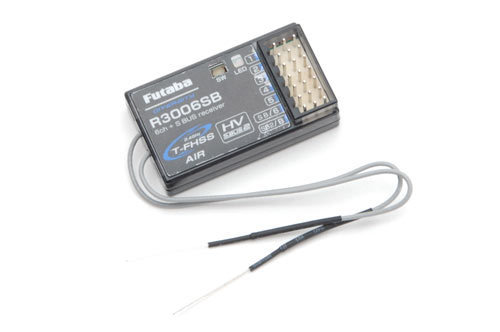
This is the six channel R3006SB receiver – note the sockets are at right angles to the mounting surface.

This is the 8 channel R3008SB receiver – note that the sockets are in-line with the mounting surface. So by the time you wiggle your two or three plugs in here, you end up with quite a long unit.

This is the R3008SB mounted in the 105mm deep SailboatRC Pot. Plenty of space and the factory have chosen the put the electrical connector end lowest in the boat. Interesting. It would be possible to install the same receiver inside the 80mm deep pot – just about… but unless you invert it, the plugs are going to be quite close to a bilge water threat. I have been wondering of plugging in vertically like under a little umbrella is actually good for repelling water…. I’ve no idea !!

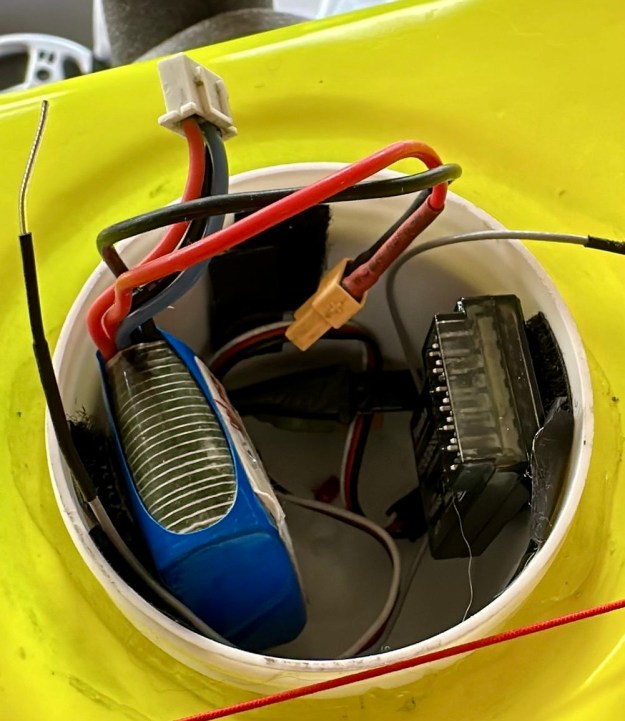
So if you are using a normal SailsEtc pot, you might prefer to consider the six channel R3006SB (with plugs at right angles) and secure that in the pot as high up as you can… quite probably with plugs at the top so they are as far away from a bilge water threat as possible. Here is that receiver installed in Nigel’s F6 – can you see what I mean??
I have been considering acquiring another Futaba Transmitter soon – prices are keen at the moment. However, my model shop in common with many now sells you a “Combi” pack which obliges you to take the transmitter with an 8 channel R3008SB receiver. It comes directly from distributor stock, not theirs. I really want to buy from my local man, but it looks like I might have to get a transmitter-only price from somewhere and buy a six channel R3006SB receiver separately alongside. So far (at the time of writing – March 2025) I have managed to find “Inwood Models” who sell from their own stock (keen price) and do list the receiver components separately. Might be the answer….

You can find the first part of this article by clicking here

Receivers and Confined Spaces…. Part 1 of 2

Like you, I know lots of radio sailors.

Around a year ago, when I was getting frustrated by Transmitter Manuals covering only airplanes, gliders, helicopters and drones… it was then that we decided that we would have to write our own user manuals for radio sailing transmitters (see Category on this website called “Transmitter Manuals”). The manufacturers are not going to lift a finger for us!! We are actually too small community for the moment. By the way, our radio sailing transmitter manuals are by far the most popular download on our website.

I was pretty encouraged to learn that MYA has 2,200+ members in UK. Good!! Did you know that around 1,500 people globally watched the IOM worlds on Youtube each day. Very good!!

Then I checked the number of licensed drone devices in the UK and found it was 500,000…. which puts us in proportion maybe. It’s therefore no surprise that we end up using RC flying radio gear adapted to sailing, buying transmitters with far more channels than we need and so on. I was beginning to realise that in radio sailing we are a tiny, tiny market. Then my Central Heating engineer came to do our annual boiler service and it turned out he is a radio control flyer.

The back of his van was half dedicated to plumbing kit and the other half given over to Radio Control flying. Fantastic in there – like the back of Phil H’s car! Our engineer’s big passion is for duration gliding competitions. In the back of the van he had a big glider plus a “flying wing”. I’d never heard of flying wings, have you?

Basically, just two Wings bolted together with hardly any fuselage at all. It’s all the rage apparently.

Intrigued, I googled to find if radio flyers have an equivalent to MYA… and they do. In UK it has 750 Clubs affiliated. So what would you think? Perhaps 10 members per club average? So at 7500 members it would be three times the size of radio sailing? I then used their website to find my local RC Flying Club. It’s in Bromley, just over the hill from here. Number of members?? ….. not 10, but 200…… blimey.

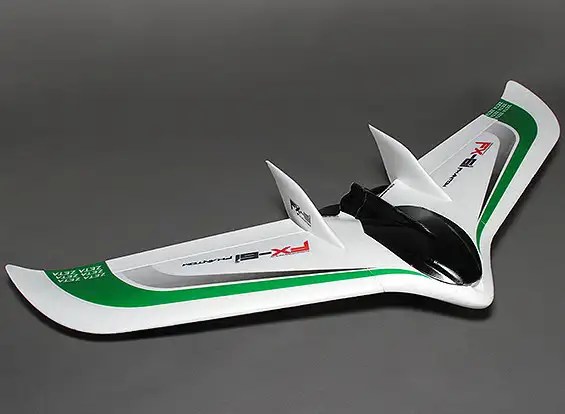
So where do all the servos, receivers and antennae go in a flying wing? The amazing answer is that they want them inside the wing structures. They want FLAT devices… and FLAT might also mean LONG. Perhaps more importantly this means they want plugs into the receiver in-line (not at right angle), so that definitely means LONG.

Oddly enough, in radio sailing we do have confined spaces for Receivers in our boats, but the spaces are not generally all that large. We also want them away from damp and water. We often, but not always, use a pot of some kind to host the receiver and on-board battery. We’ll lay out a few implications in part 2 of this article.

To read Part 2, click here

ELRS … So The Commodore Was Correct ….!!

Our Commodore, Phil H, has long been very keen on the performance of his Radiomaster-ELRS receiver… “never dropped a signal”, he says.

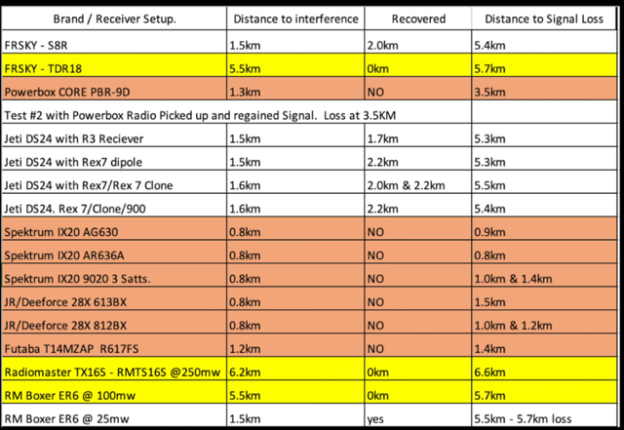
Can you read that table above ? – it’s a tad blurry, but I think you can. These are ground-to- ground test results of some major transmitter-receiver brands aimed at the Radio Flying community, …who are interested in distances measured in kilometres..

The test might also typically be using receivers with a lot more channels than we use in sailing. The test person gets more into the transmitters, but receiver capability will be a big part of the equation.

You have to keep a sense of proportion – flyers seem to worry about ranges measured in kilometres, whereas, honestly, if our boats are 100m away I panic about whether I’ll hit a mark…. or not be able to tell which one of the pack is “me” !!

No need for us to be extremely picky about range and distance, but it’s all relative….

Sure enough, Phil – the major conclusion of the test is that ELRS is basically in a class of its own. FrSky Tandem was quite close (see our recent website article), but we don’t see many of those. You can see why the tests were controversial, but essentially they left the receivers in one spot then drove the transmitters into the distance (flattish undulating terrain) until they dropped signal. I think at one point they drive over a hill and see if the signal is regained the other side.

When you are dealing with radio sailing distances of 100 metres or so, if you have signal drops you probably need to check out other parts of the system. … Interesting though…. The full link of this 2024 video is given below – it’s long and much of it somewhat heavy going. If you skip forward to around the 1’17”, the summary and results start around there.

https://www.youtube.com/watch?v=LargnWPSX04