Category Archives: Boat Care

Beginner’s Guide to… Mainsheet Posts..!!

There’s enough to get your mind around when you start radio sailing, isn’t there?! You take some pieces of kit for granted naturally (!).

Probably within one or two outings, you’ll have adjusted, or simply fiddled with, your mainsheet post and perhaps wondered, “What’s down there?”…. “can you adjust the friction?” etc

Probably most of us (UK) are using Sailsetc mainsheet posts. Both mine are made of a kind of slippery PTFE type material and the crucial thing above deck are the entry and exit holes.

https://www.sailsetc2.com/index.php/sheet-post.html

On my IOM, the post is at a racy angle,… and on the Marbleheads it is simply vertical.

The post slides snugly into a tube below deck. What’s underneath?? Well, carefully slide it out and let’s take a look at what you will see…..
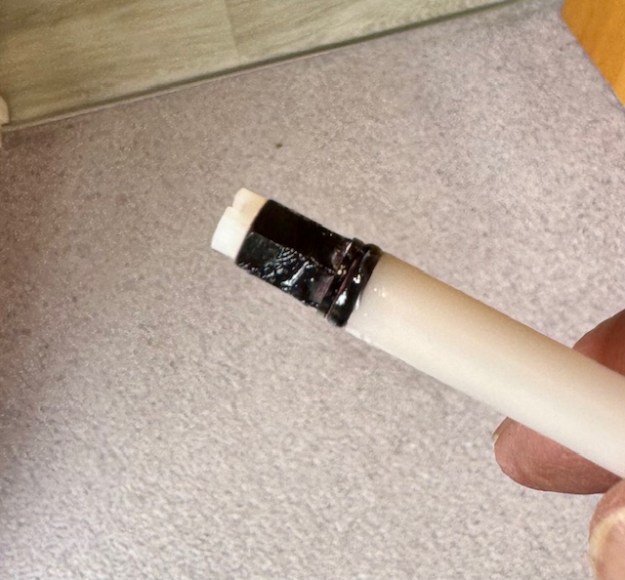
The most crucial thing is that you will immediately see how to adjust the sliding friction. Your post might feel just right and hold its position. You probably know that the general idea is (1) adjust the post as high as is feasible on sailing day so that your mainsheet run to the boom is near horizontal (2) on a gusty day, consider sliding the post down little to make the rig slightly more springy.

There are three components down there:-

A nylon bolt (white in this example) which screws into a pre-tapped hole in the bottom of the post. On this one, you just need a flat head screwdriver or a weeny spanner.

There’s your first adjustment right there. The limit of how far you can push the post down the tube is set by that screw head which will sit at the bottom of the tube in its furthest down position. The further you screw it in, the lower your post can sit.

On the post is an adjuster nut (black in this example) then a little rubber washer on the end. There’s your second adjuster. The tighter that nut screws the rubber washer to the bottom of the post, the more the rubber washer bulges…. the more it presses on the wall of the tube… the stiffer your height adjustment gets.

That’s it !! Pull your post out and take a look!! Clever in its simplicity.

A story of a third adjustment:

We may be wrong, but yesterday it looked on my Marblehead B and C rigs as if my mainsheet post did not quite want to go down low enough. It was catching the boom on both rigs as they travelled across, and I couldn’t quite deploy enough kicker to close the leech enough… so I had a free leech kind of sailing day.

I was hoping to simply screw the adjuster in a couple of mm’s to get the minimum post height down a bit. No such luck…. the screw was right in. So in a fleet conference (!) we resolved that I should instead take 5mm off the post.
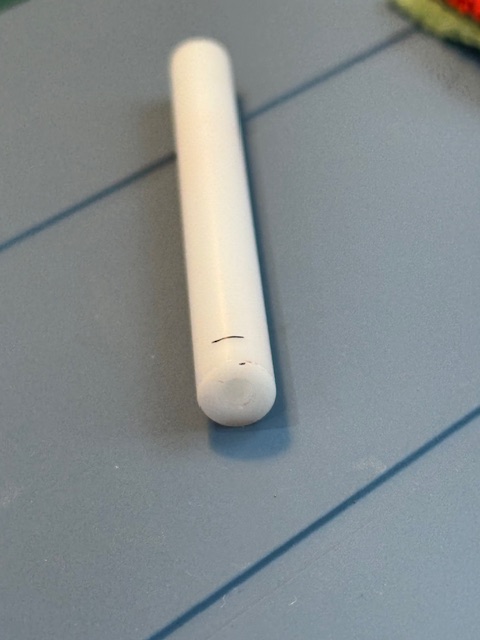
See that little black mark on the post casing above?

You don’t want to go lower than the exit eye clearing the deck (see top photo), but there’s essentially lots of adjustment available in the tube once you get the limits right.

In a gentle vice, I found it reasonably easy to cut with a very fine hacksaw and cleaned up with a file. Taking 1-2mm off would have been tricky, but 5mm was fine.

Then, as you’d guess (Murphy’s law applies), the screw hole wasn’t quite deep enough to get the adjuster screw in. I didn’t fancy making the hole deeper and re-tapping the thread. There was a generous amount of thread showing on the bolt, so I resolved to take 5mm off the end – a Stanley knife and a snipper did the job rather nicely.

Should be OK – we need another 15mph gusting 30mph day to give it a trial run.

Beginners Guide to Applying Deck Patches and Hull Numbers…!

This is something that every radio sailing newcomer will worry about the very first time they encounter it … Natural enough!

First let’s separate application of Hull Numbers and Deck Patches.

Hull Numbers :-

These are delicate little pieces of tape and you’ll want a gentle way to apply them. The safest and most effective we found was to use the famous trick of water mixed with washing up liquid. You really need to have this mixture highly diluted. The way to know if you have the correct dilution is that you want just enough soap that when you apply the mixture to the deck it leaves a smear – a constant, uninterrupted, watery film. If the surface tension leaves you with little rivulets and dry patches, then you don’t have quite enough washing up liquid in there. We are talking of tiny amounts of water and soap here – maybe a tablespoon or two of water a a few drops of washing up liquid..

Remember – this will take at least overnight to dry in quite a warm room, but the upside is that you get plenty of time to wiggle the numbers around on the slippery surface to get them looking their best.

Deck Patches :-

Deck Patches are altogether more robust and you get more choices of how to apply them. Basically dry application, water based application, or with soapy water.

It helps a real lot to get the patches cut accurately and you can read our earlier article about this here. If you get a new set of patches with the boat, make a traced paper copy for your records straight away.

For myself, I have tried (1) dry application (honestly quite tricky and on Race day most likely this is how you will do it….). (2) Soapy water as in the section above on Hull Numbers – easy, but needs time to dry.

I had not considered just using water, but have you seen this super little video on applying patches with water from Zvonko??

Hidden in the middle of this video, Zvonko makes a surprising assertion that Black Patches and White Patches are better at keeping moisture out than the other colours.

Interesting – I’d not heard that before, but Zvonko is Zvonko (!!) – it’s as if a god speaks to you directly !! You have to pay it some attention. 🙂

Then this is Zvonko’s video of how to apply patches in the dry… the key benefit being not needing time to dry off.

You’ll want to practice this for yourself … in a private, soundproof room with a swear-box to hand.

More on Waterproofing Your Electronics with Corrosion X – Video on Sealing Up DF95 Electrics ….!!

New member, Andrew G, has pointed me to this great and useful DF95 video about waterproofing your onboard receiver and other onboard electronics using “Corrosion X”

One of the notable things to me is that they are using a pointed 1oz dropper bottle to dispense the fluid. It looks like in North America 1oz dropper bottles of Corrosion X are easily available. At the time of writing, in UK I haven’t found this product packaging. The same company are doing a fishing reel lube called SpeedX in a 1oz dropper bottle, but that seems to be it.

I’d rather have some small amount of Corrosion X in the boat tool box and with me all the time. I find through past experience that if the cap comes off those dropper bottles it will leak everywhere. Instead, I am going to try one of these (very cheap on Amazon)

It has quite a pointy end on the pipette which I thought might be better for this particular job, than the ones with olive oil to stick in your ear! And once that lid is screwed in, I reckon you are going to be safe against leaks in transit. The bottle size I chose is 50ml… so about 3 tablespoons – that should easily be enough for radio sailing.