Category Archives: Backup Equipment and Tools

Beginner’s Guide : The Fin-Bolt Nut (Tools!)

Do you take your fin off every weekend??

SailboatRC recommend leaving the IOM fin on, so I religiously do so – and have one of those lovely Potter Onesie padded bags for the whole thing. The fin is attached with an M3 bolt, needing a 2.5mm hex key.

In the Marbleheads, the fins are that bit longer – we all take the fin on and off every weekend as “the norm”. I had an M3 bolt on there, which turned out to be not really up to the job – too much leaping across the Datchet waves! Doctor Hetem has popped in an M4 bolt for me now (needs 3mm hex key) and I’m much more confident in it. I wouldn’t want my fin to be the third in living memory to have dropped to the bottom of the lake!

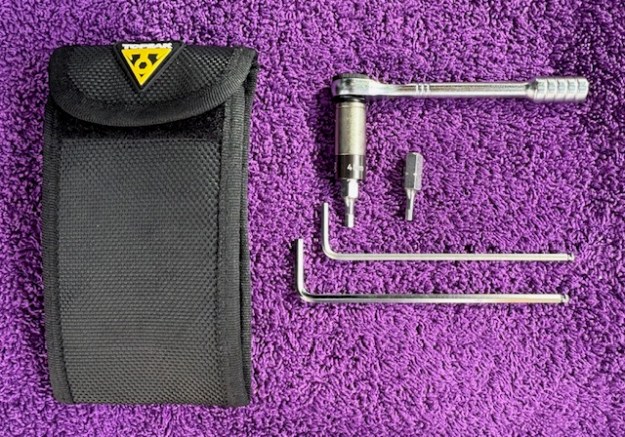
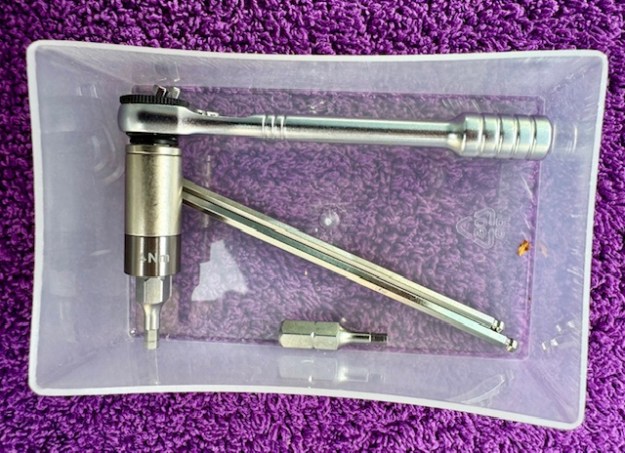
GH was careful to tell me to be very wary of over-tightening the bolt. I’ve been using simple hex keys left over from my cycling club days – nice ones with those round “any angle” ends on them. On the wide side, there’s about a 75mm throw so maybe the available leverage is a bit high. (See photo above). Too easy to over-tighten.

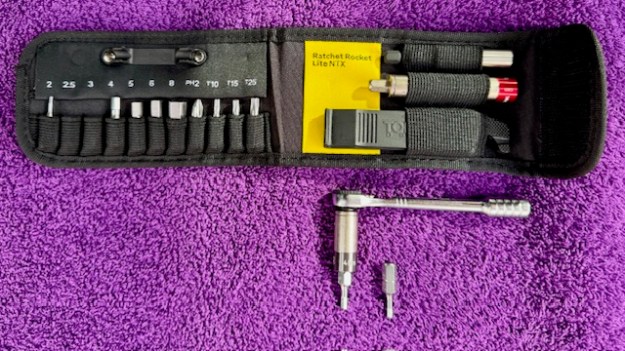
GH recommended one of those T-bar hex keys. However, as I dipped into the old race bike tool box I suddenly remembered I had a mini ratchet/torque wrench from a brand called Topeak (very big brand in global cycling). It has 2.5 and 3.0mm keys in the selection. The torque heads can do 4,5,6nm of measured torque, but I feel that even 4nm is a tad much for the Marblehead fin. However, as you throw the lever you can easily feel the “bite point”. Simply to provide shaft length to clear the deck well around the mast, I have the 4nm head on there in the photo (above), but have never let it “click”. If you look carefully at the top photo you can see “4nm” engraved on the shaft extension.

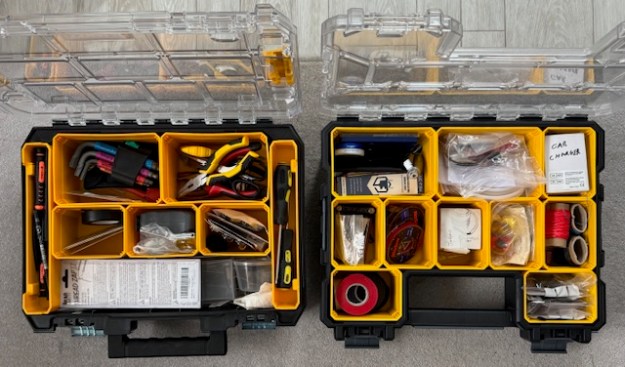
The ratchet on the handle is a dream for putting our long fin bolts in and out. Love it. Plenty of space in the tool box too. It comes with a little pouch, but my preference has come to be keeping the subset I need in a neat translucent plastic box – which turns out to be an old business. card box. I knew I’d find a use for those one day 🙂

The whole thing will be great for the Ten Rater (of my dreams) too !

You can see the current product on the Topeak website at this link below. Even better, the current product has 1-6nm of torque adjustment, an improvement over the 4/5/6nm set that I have. Click here:-

https://www.topeak.com/global/en/product/1602-TORQ-ROCKET-mini-DX

More on Waterproofing Your Electronics with Corrosion X – Video on Sealing Up DF95 Electrics ….!!

New member, Andrew G, has pointed me to this great and useful DF95 video about waterproofing your onboard receiver and other onboard electronics using “Corrosion X”

One of the notable things to me is that they are using a pointed 1oz dropper bottle to dispense the fluid. It looks like in North America 1oz dropper bottles of Corrosion X are easily available. At the time of writing, in UK I haven’t found this product packaging. The same company are doing a fishing reel lube called SpeedX in a 1oz dropper bottle, but that seems to be it.

I’d rather have some small amount of Corrosion X in the boat tool box and with me all the time. I find through past experience that if the cap comes off those dropper bottles it will leak everywhere. Instead, I am going to try one of these (very cheap on Amazon)

It has quite a pointy end on the pipette which I thought might be better for this particular job, than the ones with olive oil to stick in your ear! And once that lid is screwed in, I reckon you are going to be safe against leaks in transit. The bottle size I chose is 50ml… so about 3 tablespoons – that should easily be enough for radio sailing.

Beginner’s Guide : Losing Contact with the Boat and Diagnosing That It Turns Out To Be Moisture in the Electrics…..!!

I’d heard a lot about this subject as a beginner. It must happen a lot !

As you may have seen on the website yesterday, during the Marblehead Rankings Nigel B lost radio contact with his F6.

It turned out to be “damp in the electrics”. We had only one discard in the day, so it was really important for Nigel to diagnose and fix it quickly. This is what he did (very rapidly!):-

1/ Boat on to the stand, pot lid off, and quickly verify power in the boat and especially at the receiver because the receiver’s LED was glowing green. Waggle the two joy-sticks to determine what was working and what was not working.

2/ Sure enough, for Nigel the rudder was not responding, but the mainsheet was OK. Conclusion = not a complete closedown and there is power in the boat. Good news.

3/ LED was green so that tells you it’s in the rudder setup somewhere. Where to look next?

4/ Statistical guess : rudder servos don’t fail all that often, so the connection where the rudder circuit joins the Receiver is number one suspect. Pull out the connector to channel one and have a close visual inspection which revealed the wicked glint of moisture.

5/ I’d heard about a product called “Corrosion X” before, but not seen it in action. It looks like WD40, may be a bit thicker perhaps. It is supposed to do all the WD40 type things plus be the best water dispersant and repellant that money can buy,… safe on electronics especially. Anyway, out comes Nigel’s Corrosion X aerosol from the van, …squirt squirt…. deep into the connectors of the receiver… right “in” there….I must say Nigel was not afraid to be generous. Then a good blow to help the excess away. I don’t think it needed a moment to dry or anything like that.

6/ Plug the rudder circuit back into the receiver, checking the plug is the correct way around (!!), instant fix !! Waggle joysticks and “job done”!!

7/ Pot lid on – go racing !!!

Lessons :-

a) I think GH uses Corrosion X as a regular setup tool (not just a “fix”) on the electrics. Interesting.

b) someone in the car park probably has a can of Corrosion X, but I resolved to get a 250ml can from Amazon and keep it in the car….. WRONG!!

This photo above is the smallest, cheapest Corrosion X unit on Amazon. Obviously to all of us, 250ml will last a radio sailor several lifetimes. However… I made a mistake because that trigger on the can is NOT an atomiser. Squeeze the trigger and there’s only one adjustment size…. A thick rod of lubricant shoots out – honestly one squirt would make an entire Chieftain Tank very slippery !!

You actually want the smallest aerosol can that you can find online. (see Nigel’s in the top photo). Eventually I had to go to the manufacturers own (UK) website and order it there. 475ml was the smallest aerosol …so two friends can share one, each for a lifetime. Shipment from amazon is free of course, but CorrosionX use Fedex so your total price is bumped up a lot. 475ml was though near the same price as 250ml with the trigger on top, so keep a sense of humour and sense of proportion about the whole thing!!

If you know anyone with a Chieftain Tank, let them know I have something for them….