
Like you, I know lots of radio sailors.
Around a year ago, when I was getting frustrated by Transmitter Manuals covering only airplanes, gliders, helicopters and drones… it was then that we decided that we would have to write our own user manuals for radio sailing transmitters (see Category on this website called “Transmitter Manuals”). The manufacturers are not going to lift a finger for us!! We are actually too small community for the moment. By the way, our radio sailing transmitter manuals are by far the most popular download on our website.

I was pretty encouraged to learn that MYA has 2,200+ members in UK. Good!! Did you know that around 1,500 people globally watched the IOM worlds on Youtube each day. Very good!!
Then I checked the number of licensed drone devices in the UK and found it was 500,000…. which puts us in proportion maybe. It’s therefore no surprise that we end up using RC flying radio gear adapted to sailing, buying transmitters with far more channels than we need and so on. I was beginning to realise that in radio sailing we are a tiny, tiny market. Then my Central Heating engineer came to do our annual boiler service and it turned out he is a radio control flyer.
The back of his van was half dedicated to plumbing kit and the other half given over to Radio Control flying. Fantastic in there – like the back of Phil H’s car! Our engineer’s big passion is for duration gliding competitions. In the back of the van he had a big glider plus a “flying wing”. I’d never heard of flying wings, have you?
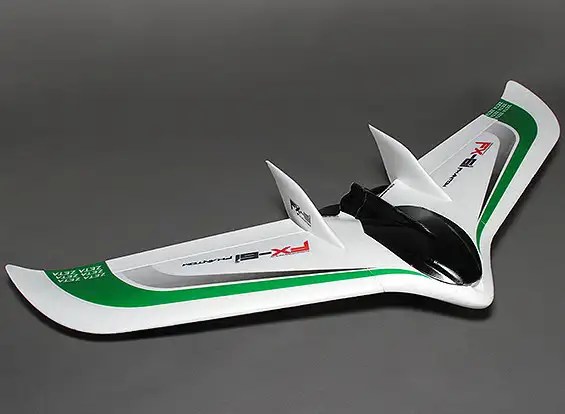
Basically, just two Wings bolted together with hardly any fuselage at all. It’s all the rage apparently.
Intrigued, I googled to find if radio flyers have an equivalent to MYA… and they do. In UK it has 750 Clubs affiliated. So what would you think? Perhaps 10 members per club average? So at 7500 members it would be three times the size of radio sailing? I then used their website to find my local RC Flying Club. It’s in Bromley, just over the hill from here. Number of members?? ….. not 10, but 200…… blimey.
So where do all the servos, receivers and antennae go in a flying wing? The amazing answer is that they want them inside the wing structures. They want FLAT devices… and FLAT might also mean LONG. Perhaps more importantly this means they want plugs into the receiver in-line (not at right angle), so that definitely means LONG.
Oddly enough, in radio sailing we do have confined spaces for Receivers in our boats, but the spaces are not generally all that large. We also want them away from damp and water. We often, but not always, use a pot of some kind to host the receiver and on-board battery. We’ll lay out a few implications in part 2 of this article.
To read Part 2, click here
 Datchet Radio Sailing - Making It All Much Easier !!